
Sunday, April 4, 2010


Friday, April 2, 2010
Ask the Ice Moms: How Do You Put on a Club Ice Show?
Reader V. e-mailed me ages ago asking this simple question:
I have been selected to be the Committee Chair to plan our year-end show. We have a small figure skating club - approx 40 skaters (all levels). Do you have any ideas for theme, planning, organizing a show?
I have no experience with ice shows beyond cleaning out the locker room toilets and manning the ticket sales table. Here's what the board had to say:
From Xan, figure skating coach, parent of a professional ice show skater, and blogger at Xanboni!
They need a policy on solos (everyone gets one, or only above a certain test level) and they need to figure out levels for groups. They need to make sure that their rink or municipality has an ASCAP and a BMI license for music rights (most do). Choosing the music is the easy part, but they need someone to cut it, and they need to determine a standard length for all solos and group numbers, so no one feels slighted.From figure skating parent S.F.:
A nice thing to do with an ice show is to donate part of the proceeds to a local charity, like the Breast Cancer Walk, or book drive. That organization will help get audience, and local newspapers are more likely to pay attention to it.
If they're a US figure skating club, or in an area that has Basic Skills programs, they should call Susi Wehrli, member director for U.S. Figure Skating and ask her for resources. The phone number I found by Googling her is 719.635.5200, but I'm not vouching for it. Susi's counterpart at the Ice Skating Institute, in case they're an independent club or ISI program, is Randy Winslip. Both Susi and Randy are very approachable and know everything there is to know about clubs. Hope that helps!
We used to do group numbers and divide the skaters up based on ability. The past several years we changed the format and the skaters perform the competition programs in front of an audience and the audience votes for their favorite skater. We found this format worked well for our club because we were able to put it together with less ice time/coaching fees then when we did group numbers.From figure skating parent PairsMom, whose son and his partner won a gold medal for Intermediate Pairs skating at the December 2009 Junior Nationals competiton:
Here is my advice:
- First and foremost, make sure that rink management, staff, and coaches are all "on board" and enthusiastic about the show and willing to lend their support.
- Form a committee and pick a theme - check other club websites for ideas of show titles
- Committee could consist of the following titles (this is a minimum and there could be more)
- Show Director (probably a coach)
- Music Director - someone to select music, cut music, make copies for skaters, play music, announce, etc.
- BackStage Director - a parent that can literally run things backstage, on or off ice behind the curtain lining up groups, solos, etc.
- Costumes - someone to oversee and approve costume selections, make suggestions, etc.
- Publicity/Tickets
- Rehearsal Asst./Runner - older skater (HS or College) or parent
- Props/Set decorations on ice and/or in the lobby
- Plan to have an all cast combined number for opening and/or closing of the show to include all skaters of all levels. This will be the highlight of your show and the most memorable for all involved - I PROMISE!
- Delegate, delegate, delegate
From board member S.L., who gets roped into running her club's show every year:
- Pick a date - This can be hard because of vacations, school breaks, and hockey conflicts. Find the most practice ice available and work your date around that.
- Pick a theme - Get ideas from kids, such as: Saturday at the 70's, traveling (very flexible), newspaper (very flexible), jungle, Disney, beach, music genres. Avoid religion. People will always be unhappy with the theme, but these are usually the people who complain anyway. When considering the theme, think about how hard it will be to get costumes and music.
- Sets - Sets are always last. Ask one person from each group to facilitate props. The coach decides what props and sets they'll need. Less is better, especially with little kids.
- Costumes - use dance books to help with ordering, but costumes can be expensive. You can go to costumes.com or some place similar for good deals.
- Budget - Decide what's realistic. Charge skaters their registration fees based on what you'll need to cover the ice costs. The goal is for the show to pay for itself. For us, it's rarely a fundraiser. Sometimes you can get a portion of the ice fees donated and maybe some of the pros will donate their time, too. Ticket sales usually pay for the pros and cover the cost difference between registration fees and the cost of ice and costumes.
- Printing - We get our posters and flyers 100% donated. Our figure skater memory book printing is donated, too. So any money we collect from the memory book is profit.
- Celebrations - the rehearsal dinner, cast party, pictures, DVDs, and T-shirts pay for themselves.
- Jobs - co-chairs, back-stage lead, costumes, dressing room monitor, lights, Learn to Skate liaison, memory book creator, music man, cast party planner, program creator, props master, concessions, set-up and clean-up crews, ticket sellers, t-shirt coordinator, videographer, and photographer.
It's a lot of work, but very rewarding. Go in knowing that not everyone will be happy, but those people are the ones who don't help, so you don't feel as bad. It's a lot of work; don't let it scare you. It comes together nicely in the end.
Do you have any experience with club ice shows? Don't be afraid - I'm not asking you to volunteer! If you know anything that would help someone with an ice show, please put it in the comments!
As always, if you have any questions for the Ice Moms, just e-mail me! You can also send me any post ideas you have. If you're an expert, please contact me! I'm always looking for experts for Wednesday's Ask the Expert feature. My e-mail is: icemom.diane@gmail.com
You know this blog is moving, right? Tomorrow (and thereafter) you'll find it at IceMom.net.
Thursday, April 1, 2010
How-to: Counsel a Kid out of Figure Skating
Mom, I'm going to tell it to you straight: you need to counsel your kid out of figure skating. The other parents aren't saying anything when your skater whines in the lobby and complains in the parking lot. They're too polite and they've known you for years. They're your friends and they think you'll be offended if they have the awkward conversation with you.
I'm going to do it: save your money and find your figure skater something to do outside of the rink.
Mom, I'm not trying to be mean. Really. I like you. I even like your whiny kid, when she's away from the rink and having fun. It's just painful to watch the scene your skater makes every week and it's painful, too, to know how you're scraping together the money to put her on the ice.
Here's how you do it, Mom:
- Cold turkey. Just take a break. Maybe a month. Maybe the summer. When the time for the next ice contract comes around, ask your figure skater if she misses it. She probably won't.
- Maintain friendships. Arrange for times to spend with her (former) figure skating friends. Keep those friendship ties, but do it away from the rink.
- Bandwagon. Ask your skater what her school friends enjoy. I don't care if it's knitting, find a way for your kid to join in.
- Replace. At the very same time that your skater would be on the ice, find something wonderful, marvelous, adventurous for her to try. Normally I would never recommend horse back riding (the only thing more expensive than figure skating), but if it gets your kid off the ice, it's worth the money.
- Bait-n-switch. Does your skater love the musicality of figure skating? Try dance. Does she like the performance aspect? Try theater. Does she like the movement? Get her roller blades and crown her queen of the roller rink.
- The long goodbye. Reduce her ice time so gradually that she doesn't even notice it happening. Pretty soon she'll be weaned off of the ice.
- Reward behaviors you want to see. When she's trying the new activity, gush appropriately. Watch her and be amazed. Encourage her to talk about her new activity and how very, very cool it is.
Tell her that just because she doesn't like figure skating as much as she had thought, she isn't a failure and she isn't a bad person. She just needs to find that passion, that spark, that special interest that will take her from whiny to wonderful.
Give your kid permission to quit. Please. I promise I'll call you. We'll have coffee. We'll take the kids to the movies. We'll catch up and laugh. You'll show me photos of your kid on her horse, on stage, or at the gymnasium. The kid will beam with pride. We'll both gush appropriately.
I can't wait.
Alright, parents. Do you have any ideas for this mom? How would you recommend that she counsel her kid off the ice?
Do you have a question for Ice Mom? Ice Coach? Ice Girl? Synchro Mom? Are you an expert and you want to contribute to the Wednesday Ask the Expert Feature? Do you have a suggestion for a post you'd like to see? Wonderful. E-mail me at icemom.diane@gmail.com.
Wednesday, March 31, 2010
Ask the Expert: Jenny Hall, Former Ice Show Figure Skater

So your son or daughter wants to join an ice show. They are turning 18 pretty soon and you’re wondering if you’re crazy to let them do it.
I don’t think so.
Perhaps you’re thinking that your kid needs to go to college first because they will never get ahead in life without a college degree. That’s probably true. But the cool thing is you don’t have to pick one at the expense of the other – your son or daughter can do both. Although usually not at the same time.
The most important concept I thought of when writing this post for Ice Mom is that parents may feel by joining an ice show their son or daughter will be exposed to all things evil: weigh-ins, promiscuity, drinking and/or drugs, lack of safety, backstage cattiness, insufficient funds, injuries, or insecurity in themselves. Yes, they’ll probably face all of that and worse.
But it won’t be because they joined an ice show as much as a result of turning 18. It’s part of what happens when they leave home. They can face the same challenges in college, the office, or if they become a coach at a rink. Granted, dealing with all of those evils at one time in a far-flung location can be overwhelming, but in my case, it forced me to mature on my own and later I was glad for the challenge.
So, let them give it a try, tell them they can always return if they don’t like it, and tell yourself that you may get to visit them in an exciting, exotic spot of the world. One mother I spoke with spent two weeks on a beautiful Scandinavian cruise for free.
Another plus is your kid will be earning money for skating instead of you paying for it. Not bad.
So, let’s walk through some of the basics for your son or daughter:
- For their best success in ice shows, they may want to join right out of high school at their physical peak. But they don’t have to. I had two years of college before I joined a show at 20. While it was true, I lost the conditioning of my senior freestyle program in my legs and in my lungs that I had at 18, I was still okay for the show. I rose to the occasion, skated on a lot of practice ice and improved my skating in other ways. And I was more mature than I would have been right out of high school. I continued to go in and out of ice shows and college for the next thirteen years and stayed in good shape until I was 35. I also think I was a better performer because I mixed office work with the skating world and tried to enjoy the best of what each environment had to offer. So it is not too late to start somewhere in their 20s.
- Do your homework – talk to show skaters if you can. No two ice shows are the same but certain shows will have certain set environments. Let’s just say that Holiday On Ice gives the skaters more independence – which also means less supervision. Disney On Ice has more hand-holding. Touring shows will have more variety than a park show, but also more uncertainty. I was drawn to traveling, so starting with a big touring show was the right choice for me, but someone who is more interested in their skating should look at the show’s caliber of skating first. That may be the Royal Caribbean cruise ship show or Disney. If a skater plans on making this their career for a while, a long-term show is best for steady income. Stick with a touring show or a cruise ship show that’s going to be around for a while. If it is more about having fun, try a summer amusement park show. They are several of them in countries besides the U.S.
The nice thing is ice shows are still a small world and once a skater finds work in one, they will find it pretty easy to get the scoop on others. The Professional Figure Skaters Cooperative (PFSC) has made it even easier to get all the casting notices in one place and they even have a seminar in beautiful Sun Valley, Idaho open to younger skaters to hear first-hand what ice shows can be like.
- Don’t play down the physical attributes of skating in ice shows. I took it for granted until I was retired how beneficial it was to have a job that required movement rather than sitting at a desk or standing by the boards. If a skater can stay away from injuries and eating disorders and stay healthy, their skating will pay dividends long after they put away the false eyelashes. There will be plenty of time for more sedentary jobs, but move when and while you can. I firmly believe having skated in my twenties and thirties will keep me healthier when I face my fifties.
- While college is largely about planning (as in planning to graduate and cash in on that expensive degree), ice shows are more about living in the moment. When you are performing, that is the only thing going at that very moment. You’re not stopping during the pinwheel to check your Blackberry. You don’t leave during intermission to pick up your sick child at daycare (well, if you did, you probably wouldn’t be allowed back). From the time you walk into the dressing room at half-hour to the time the curtain goes down in Finale, you have one purpose – to skate the show. Maybe you have the goal to skate it well. (But maybe it’s a Saturday matinee and you’re only putting in a C performance – ask someone from Ice Capades). The flipside is when the show’s done, you’re done for the day. It is not to say skaters don’t have goals in ice shows, but they can have the freedom not to.
- Realize that ice shows won’t be in their life forever. The reality is few in the chorus in Capades, Holiday or Disney went on to have careers in ice shows. There are jobs in production, choreography, costumes or sets to move into once your legs stop moving, but they are few and far between. Luckily, I think most chorus skaters want to move on from ice shows and into permanent housing, relationships, and jobs anyway. Hopefully the skater will enjoy the traveling, the costumes and the performing while they can.
Tuesday, March 30, 2010
Synchro: No Way. We Need Ice Dance, Too?

Mom decided one day her daughter needed to try a sport! Not having any sports ability, we just decided to put it out there. First we tried softball, no good: Mom took a ball to the face.
O.K. let’s try volleyball, no good: Daughter took a ball to her face.
Much dental work and many oral surgeon visits later, Mom with her swollen face decided that Daughter would try ice skating. Off to the rink, which, lucky for us, is almost in our backyard, to begin our journey. At our rink, Daughter loved the ice and the sport! YAY!
At our rink, synchronized skating is HUGE and I mean HUGE! We have several teams at different levels and skaters with competitive spirits that skate daily to win! Synchro Girl watched in awe as the skaters linked together and covered all areas of the ice.
She wanted to join immediately; that was not to be the case. First, she had to participate in a three-week synchronized training session in the spring and then tryout. She was placed on a preliminary team and we were off and skating sync.
Through the years, she has skated her way up to different team levels and is having fun and working hard. Please join us in our journey to see what the synchro world has to offer. It will be fun-filled and I hope useful. I’ll also explain the use of white bobby pins for competitions! (Please Ice Mom: let me keep blogging, I promise to be good!)
Many of us Synchro Moms sit in the stands at the end of each night, frozen, yet smiling merrily as our skaters glide by. We’re just waiting for the Zamboni buzzer to go off and our skaters to exit the rink until tomorrow. Isn’t it funny, how even frozen to the core, you still have some of your senses? I can pick up a conversation, down three rows, from one end of the bleachers to the other.
I’m sitting all alone, trying to read, when I hear something I haven’t heard in the four years I’ve been warming that stupid bench.
I looked up from my book and shouted, “What? You need ice dance, too?”
After four years of synchro-skating where did that come from?
I moved down the bleachers. O.K., I ran down the bleachers so I could listen to the other Synchro Moms discuss the benefits of synchro-scholarships and how ice dancing is a requirement for many of the college teams.
So we will now add ice dance to Synchro Girl’s lessons and I will explore the requirements a synchronized skater would need to be eligible for college synchro-scholarship. (Should we just say watch for this blog posting as I want to list all or many of the colleges that offer scholarships?) Thoughts?
What do you think, Synchro Moms? Should Synchro Skaters take Ice Dance? Do you recommend anything else? Heard any rumors about Synchro-Scholarships? Let's share our knowledge!
As always, if you have some brilliant idea for a post, please let me know! If you have any questions for me, the Ice Moms, Ice Coach, Ice Girl, Synchro Mom, or anyone else, I'll try to lend you a hand. If you're an expert, you can be my new best friend if you consider posting for the Wednesday Ask the Expert feature. Just send me an e-mail! icemom.diane@gmail.com

Monday, March 29, 2010
How-to: Make Your Own Figure Skate Deodorizer
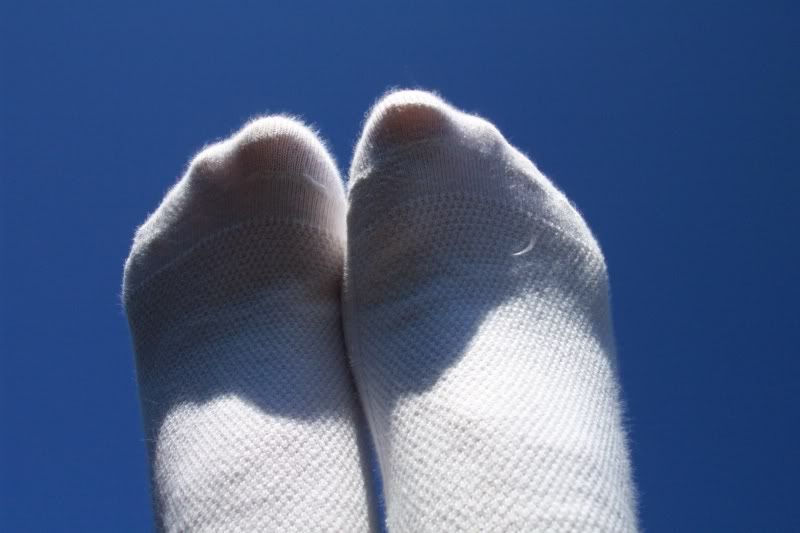
The Stinkeez is filled with silica gel, which is a desiccant. You know those little paper packets that come in purses or shoe boxes? Those are filled with silica gel. You can find silica gel in bulk at craft stores. Crafters use it to dry flowers.
You can make a home-made Stinkeez very cheaply using single socks and cheap ingredients.
Materials:
- Two clean, mismatched socks - with tops (not little ankle socks)
- A desiccant: baking soda or white rice or cornmeal and borax or silica gel (You just need one of these, not all of them. So, if you choose baking soda, you don't need rice, etc. You'll get the best results with silica gel.)
- Wide-mouthed funnel or a rolled-up piece of paper or a narrow drinking glass
- Optional: scented oil (peppermint, etc.)
Add a couple of drops of scented oil and tie off the sock's top with an overhand knot.
See? Cheap and simple. If you want to go fancy, buy some funky toe socks or holiday socks.
Update: From Advisory Board member S.F.: One of the best ways to combat stinky skates is to remove them from the skate bag so they can dry out. It also prevents them from rotting. My daughter had a pair of skates rot last year because we never took them out of the bag when we got home. We have been removing them religiously every day and they no longer are smelly.
I also would like to comment about laces. I change laces frequently because white laces get dirty pretty fast. My daughter's ice coach likes clean skates and laces on test days and competition days.
Do you have a good idea for keeping boots dry and socially acceptable? Let us all know!
Have a question for Ice Mom or the Advisory Board? Do you have an idea for a post? Would you like to write a guest post? Awesome! E-mail me at icemom.diane@gmail.com.
Friday, March 26, 2010
Ask the Ice Moms: Where Can I Find an Adult-Friendly Figure Skating Club?
I am an adult skater who started skating about a year ago. However, I am really into it and want to compete eventually. I am finding it hard to find a coach who takes me seriously! It seems to be all about the younger skaters. I mean, I understand that they are the ones with "potential," but I am giving them money too. And I want to give MORE money. Every time I try to join a class or get an extra lesson in, the younger skaters come first. Three times the adult classes have been canceled because "not enough signed up." I don't understand why I cannot just skate around with the 13 year olds. Are there any rinks that are more adult friendly? I just graduated college and I'm willing to try to find a job near better rinks (as long as I like the area, etc). Or is there some way I can be taken more seriously?
From PairsMom, the mother of a pairs skater. She lives in USFSA's Southwestern Region.
Maybe get on the USFSA website and contact the Adult Skating rep. for her region (area) and they can put her in touch with a coach that is teaching adults or at least be able to tell her which rinks offer adult classes. This would be a relatively simple thing to do and probably a good starting place.
From Ice Coach, who is in the Upper Great Lakes Region.
This tends to be the case with a lot of rinks/coaches. I know specific coaches that will only take younger kids because they feel older ones are not going anywhere. As in a lot of cases you have to find a coach who will work with your goals. There are some coaches out there that have their own goals & agendas (getting kids to Regionals/Sectionals or higher) that they don’t really bother with adults or people that don’t fit with that goal.From Xan, a figure skating coach who started as an adult. She blogs at Xanboni! and lives in the Upper Great Lakes Region.
I think our rink is the most adult friendly I have seen. It seems like if you get a couple of adult skaters and then more will gravitate towards that rink. J.C.U had the adult only session Thursday nights last year and that was very nice. The only problem was filling the ice, but I know the adults really appreciated it. As far as Learn to Skate, I never have a full adult class, but I also will never cancel a class if one person signs up. What usually happens is the one adult will tell another and then next session I will have 4 or 5 adults in class. Plus many of them like to learn along w/ their kid. I hope that helps.
Absolutely a rink should be friendly to adults, and if an adult class gets canceled, most rinks will let you skate around with the kids. I have never heard of a rink that cancels an adult class and then just tells the adults they can't skate. Every day I hear some new insanity. Some rinks manage to develop better adult programs than others, usually because there's a coach that's into them. This skater should just start skating at every rink she can reach, during any adult skate time (often noon public skates) and just start talking up the adult skaters she sees. She'll soon find the rink with the great program. As far as relocating, the Chicago area has lots and lots of adult skaters. Come join us! :)From S.F., who also lives in the Upper Great Lakes Region.
I forwarded this to my ice coach. This was her advice:
LTS classes may be canceled due to low attendance at any level. Interview coaches and talk to them about your goals. Choose one that wants to help you.
I personally see quite a few adults on ice at our rink. They work on MIF/Freestyle and dance. They usually aren't on the ice after school gets out but usually skate in the early afternoon or during the adult freestyle that we have at our rink. Adult freestyle ice is Sat am 7 to 8 and Sun pm 5:30 to 6:30pm.
From Kel, who lives in the Upper Great Lakes Region.We recently had a test session where a club member took her adult pre-bronze MIF test and she is in her late 70's early 80's. We also have an ice dancer in her late 40's that has been skating about 4-5 years and is working on Pre-gold dances and just tested her prepre and prelim MIF. So I believe that ice coach is right. Interview coaches and talk to them about what the skater wants to accomplish and see if they are willing to help the adult skater achieve their goals.
I really feel for this skater. It is difficult to "break in" as a new skater as an adult. I would strongly ask around and find a coach that is interested in taking on an adult student. This will allow her to advance more quickly, as I'm sure she's willing and interested in making the extra effort to practice the skills she's learned. Finding the right coach is key -- I'd suggest she ask around. Once she finds the right coach, she'll fly.From J.C.U., a competitive adult figure skater who won a silver medal at last year's Adult Championships. She is also a figure skating coach who lives in the Upper Great Lakes Region.
Certain clubs and rinks have more opportunities for adults than others. A few that come to mind are Cincinnati OH, Grand Rapids, MI, Minneapolis/St Paul MN and most of the clubs in the Skating Council of Illinois. The adult figure skating population is the second fastest growing group, second only to synchro. I think adults are often not taken as seriously as the youngsters because of the demand careers and families make. Adults tend to take breaks from skating more often than the kids. Instead of looking for group lessons, I'd encourage you to find a private coach who is coaching or who has coached other adults. Ask the potential coach if they've had any students compete at Adult Championships. Your money will be well spent in one-on-one lessons with the right person. Be sure to have "trial lessons" with any coach before you commit. Good Luck!
These responses are heavily weighted to the Upper Great Lakes Region, but only three are from the same rink area.
Readers? Can you help this skater? Do you have a vibrant adult program at your rink? Please share the knowledge in the comments. Naming rinks or clubs is a very nice thing to do.
Do you have a question for the Ice Moms? Do you have an idea for a post you'd like to see? Are you an expert and want to share your knowledge? That's terrific! E-mail me at icemom.diane@gmail.com!
Subscribe to:
Posts (Atom)