Showing posts with label money. Show all posts

Thursday, April 1, 2010

How-to: Counsel a Kid out of Figure Skating

We've all seen this kid: she drags herself into the rink, slooooowly puts on her figure skates, gets on the ice like she's going to prison, and skates around aimlessly. She exits the rink to retie her skates, to adjust her ponytail, to get a drink of water, to hide and read a book. When she does skate, she practices moves, jumps, and spins that she learned three years ago in Basic 8.

Mom, I'm going to tell it to you straight: you need to counsel your kid out of figure skating. The other parents aren't saying anything when your skater whines in the lobby and complains in the parking lot. They're too polite and they've known you for years. They're your friends and they think you'll be offended if they have the awkward conversation with you.

I'm going to do it: save your money and find your figure skater something to do outside of the rink.

Mom, I'm not trying to be mean. Really. I like you. I even like your whiny kid, when she's away from the rink and having fun. It's just painful to watch the scene your skater makes every week and it's painful, too, to know how you're scraping together the money to put her on the ice.

Here's how you do it, Mom:
  1. Cold turkey. Just take a break. Maybe a month. Maybe the summer. When the time for the next ice contract comes around, ask your figure skater if she misses it. She probably won't.
  2. Maintain friendships. Arrange for times to spend with her (former) figure skating friends. Keep those friendship ties, but do it away from the rink.
  3. Bandwagon. Ask your skater what her school friends enjoy. I don't care if it's knitting, find a way for your kid to join in.
  4. Replace. At the very same time that your skater would be on the ice, find something wonderful, marvelous, adventurous for her to try. Normally I would never recommend horse back riding (the only thing more expensive than figure skating), but if it gets your kid off the ice, it's worth the money. 
  5. Bait-n-switch. Does your skater love the musicality of figure skating? Try dance. Does she like the performance aspect? Try theater. Does she like the movement? Get her roller blades and crown her queen of the roller rink.
  6. The long goodbye. Reduce her ice time so gradually that she doesn't even notice it happening. Pretty soon she'll be weaned off of the ice.
  7. Reward behaviors you want to see. When she's trying the new activity, gush appropriately. Watch her and be amazed. Encourage her to talk about her new activity and how very, very cool it is.
Mom, don't listen to your kid when she says in that whiny voice that she loves figure skating and doesn't want to quit. Instead, listen to her behavior. Her attitude, her actions, and her level of activity should all be good indicators that this sport isn't for her. Be strong, Mom. You can do it.

Tell her that just because she doesn't like figure skating as much as she had thought, she isn't a failure and she isn't a bad person. She just needs to find that passion, that spark, that special interest that will take her from whiny to wonderful.

Give your kid permission to quit. Please. I promise I'll call you. We'll have coffee. We'll take the kids to the movies. We'll catch up and laugh. You'll show me photos of your kid on her horse, on stage, or at the gymnasium. The kid will beam with pride. We'll both gush appropriately.

I can't wait.

Alright, parents. Do you have any ideas for this mom? How would you recommend that she counsel her kid off the ice?

Do you have a question for Ice Mom? Ice Coach? Ice Girl? Synchro Mom? Are you an expert and you want to contribute to the Wednesday Ask the Expert Feature? Do you have a suggestion for a post you'd like to see? Wonderful. E-mail me at icemom.diane@gmail.com.

Thursday, March 25, 2010

Announcement: MySkatingMall.com's Grand Opening on Friday

Please note: Ice Mom does not accept funding for posts like these. All advertising is separate from editorial content.  I'm posting this because I think that Ryan Jahnke's MySkatingMall.com is a great idea that benefits buyers, sellers, and clubs.
 
I’ve written it countless times: figure skating is expensive. I’ve also written that Learn to Skate is the only bargain in figure skating.

Turns out, I’m wrong.

U.S. World Team Member (2008) and PSA Master Rated Coach Ryan Jahnke launches MySkatingMall.com on Friday, April 26. It’s an online figure skating bargain hunter’s paradise. You’ll be able to shop for used figure skating items and see listings from all over the world. Jahnke has also partnered with some vendors who will sell new skating items.

You benefit because you save money on figure skating purchases. Your figure skating club can benefit, too. If your club registers with MySkatingMall.com, a percentage of every purchase you make will go to your club. Click here to read my complete review of MySkatingMall.com.

Save even more. As an Ice Mom reader, you can receive a 50% off of all listing upgrades if you list items for sale on MySkatingMall.com in the next week. Basic listings are completely free, but listings can be upgraded to show on the front page and at the top of the item's category for enhanced visibility.

Just type this code in the discount box provided at the end of the selling listing form: MSM

Ask your figure skating club to register. Clubs can benefit from sales at MySkatingMall.com. It’s an easy process and a painless fundraiser. Five to 90 percent of every purchase raises money for the skating club or team of the buyer and seller. Skating groups can benefit from every purchase and sale their members make! It is completely free for skating clubs and teams to register at http://www.myskatingmall.com/clubs!


Good luck with your site, Ryan!

Have any of you tried MySkatingMall.com? What did you think? Did you stop over there to browse? What was your impression? Share your thoughts and suggestions about how to make that site better in the comments. (I'll forward them to Ryan.)

Do you have a question for the Ice Moms? Are you a figure skating expert who would like to appear on the Wednesday Ask the Expert feature? Do you have a marvelous idea for a post? Excellent. Please e-mail me at icemom.diane@gmail.com.

Ice Mom's Summer Camp Survey

Wednesday, March 24, 2010

Ask the Expert, Annette Thomas: Is Ballet for Figure Skaters Worth It?

This guest post comes from Annette Thomas, classically trained dance teacher and choreographer. Thomas is also author of the book Fundamentals of Alignment & Classical Movement for Figure Skaters. You can also visit her Web site at BalletForFigureSkaters.com. Readers who would like to purchase her beautiful, thorough, well illustrated manual can buy it at MySkatingMall.com. Five percent of every purchase through My Skating Mall will be donated to the purchaser's figure skating club.


Ice Mom: Why should figure skaters take ballet?
Annette Thomas: There is no other single off-ice conditioning class that has as much to offer the figure skater as classical ballet lessons. Classical ballet lessons provide strength & flexibility training, body awareness, balance techniques, mental focus, discipline, musicality and aesthetics all wrapped into one lesson.

Ice Mom: Is it worthwhile for recreational skaters to take ballet?
Annette Thomas: It is always worth taking classical ballet no matter what level of commitment a skater has or what their ultimate goals may be as classical ballet enhances the quality of the experience of movement itself.

Ice Mom: If I have a skater who is a Regional competitor, how many hours of ballet should she take each week?
Annette Thomas: Normally Regional competitors take 2 to 3 ballet lessons per week (meaning technique lesson which are 1/ ½ hours long and not in conjunction with practicing dance recital pieces.)

Ice Mom: If a parent is watching the family budget carefully, would you recommend that she spend her figure skating money on ice and coaching or cut back on those two and include ballet?
Annette Thomas: It depends on the skater and the coach. If a skater has an aversion (or thinks they do!) to ballet obviously this will be a waste of money to try and force a skater into “doing ballet”. Many coaches are skilled at much more than just teaching skating technique and I believe that a lot of skaters miss the complete picture of what their own coach has to offer them aesthetically. Having said that, taking a regular classical ballet lesson can only help to improve the value of all that the skater does on-ice.

Ice Mom: How should figure skating parents choose a ballet instructor, or will any ballet instructor be a good fit for a figure skater?
Annette Thomas: Choosing a ballet instructor is just like choosing a coach. As a parent you should try to observe a class with your skater, discuss the lesson with the instructor afterwards and then privately discuss with your skater what you and she/he felt about the lesson and the teacher. Very importantly there should be a true curriculum based on a syllabus and no practicing of recital pieces during the lesson time.
Please see my web page for further answers to this question:
 http://www.balletforfigureskaters.com/book/exerpts/ch5.pdf

Ice Mom: Is there a question I should have asked, but didn't?
Annette Thomas: Yes: “Is all ballet created equal?” Note that I have used the phrase “Classical Ballet” throughout my answers. This is because all ballet is not created equal. Taking lessons at recreational studios which are geared toward recitals more often than not teach ballet as choreography not as a method of technique. Teachers who teach ballet by observation (meaning just as they were taught in class as opposed to having had lessons in pedagogy) will only have a minimum of positive effect. Lyrical ballet will not help the skater at all because there is very little if any refined technique to it and there is no emphasis on strength training. Classical ballet has a true methodology which takes into account the training of the entire body, head, eyes, hands, torso, etc. in incremental portions which ingrain movement and musicality into the muscle memory. It takes into account the importance of the lower back and core muscles as the “fulcrum” of the body which needs to be trained slowly and carefully for maximum potential in both strength and flexibility. Classical ballet technique forms the body from the inside out so that the technique is safe and the dancer/athlete can be secure and confident in their actual abilities.

Questions for Annette Thomas:
Readers are invited to write questions for Annette to answer in the Comments section of this post. Annette has agreed to reply to them there. Some readers have sent in questions in advance. Those questions appear here.


Reader: When a mid-level skater has limited funds, how should it be distributed between on-ice, off-ice, and dance?
Annette Thomas: Distribution is a very individual consideration which you and your primary coach would have the priority in deciding as you discuss your skater's particular needs and what is available in your area.  Also the distribution should take into account the temperament and age of the individual skater. On-ice practice is obviously the main priority for a figure skater, but people categorize off-ice in many different ways; most often it boils down to “sports oriented” (strength training, plyometics etc.) and “artistry oriented” (ballet and other dance forms). If you have an excellent classical ballet school in your area and the teacher is willing to work carefully with the skaters’ needs, I think this is the best off-ice training available in one package. If not, you may have to distribute your off-ice time and funds between something such as Pilates and a ballet or modern dance class at a local studio (just opt out of the recitals if at all possible, because that can get very expensive!)


Reader: Why is it that some ballet teachers dislike it when their students start skating? I see that a lot in my rink and often the teachers will ask the skater to stop skating or ballet. They are serious about ballet, but not to the extent of making it a career. What do you tell the ballet teacher?
Annette Thomas: Like most teachers and coaches, ballet instructors want students whose main interest is their “subject.” Children today are often involved in so many activities that long-term focus and commitment are hard to find. Skaters usually take ballet lessons for their own agenda (to improve their skating), which can cause the ballet instructor to feel as though they are not in control of the learning process. Plus, skaters often have a very different sensibility when it comes to timing and movement in general, so it can be difficult for the average ballet instructor to work with skaters in the same class as non-skaters (this is why it is so important to have a ballet program at the rink). And finally, since both ballet and figure skating require tremendous amounts of commitment, energy and hard work, a ballet instructor may feel that they do not want to invest all of the mental and emotional energy required if they know that the student is more devoted to skating. It may sound selfish, but it is just human nature. I know coaches who feel the same way; when one of their skaters’ decides she likes gymnastics and wants to take it  more often…it can be frustrating to the coach as they now not only feel like “second fiddle” they also know that their skaters energies and time will be divided making it much harder for them to teach. It is a difficult situation on both sides as the teacher wants to teach in what they feel is the most productive manner possible and yet the student should never be felt to be rejected or “wrong” for choosing other things. I always tell my students “pick one or two things in your life and try to achieve excellence in them.”


As to what to tell your ballet instructor, you might try to interest him/her into working more “one on one” with your skater (via choreography, working at the rink etc.) so that they feel as though they are more a part of the process. 


Reader: My daughter is a young skater, just starting out, but has been taking ballet/dance since she was two. What should, if anything, we do differently now that she's skating? Should we be paying more attention to certain parts of dance? Will certain moves help more than others? Also, between ballet and gymnastics, which do you think helps with skating most?

Annette Thomas: If you, your daughter and your primary coach are satisfied with your daughter’s progress, I’d say to just continue with what you are doing. Gymnastics can be extremely hard on the body and I never recommend it (to dancers or skaters). It loosens the lower back and can permanently damage joints. Classical ballet will help your daughter strengthen her body as well help her to progress more quickly in her skating endeavors. If you can find a classical ballet studio that also teaches Character Dance, this would really be ideal to include in her studies.


© 2010 by Annette T. Thomas all rights reserved. Annette T. Thomas's answers are used with permission. 

 Want to take ballet or movement classes with Annette Thomas? She'll be teaching at the Pettit National Ice Center in Milwaukee this summer. (Artistry & Movement classes are for learning character dance/music appreciation and style.)
Her schedule: 
Tuesdays: 9-10 am medium/high ballet JUNE/JULY only, 10:15-11:15 am medium/high movement June/July only, 9-10 am low ballet AUGUST only, 10:15-11:15 am medium/high ballet AUGUST only, 11:30-12:30 medium/high artistry and movement AUGUST only, 3-4 pm medium/high artistry and movement, 4:15-5:15 pm low artistry and movement
Wednesdays:
3-4 pm medium/high ballet, 4:15-5:15 low ballet
Thursdays:
9-10 am low artistry, 10:15-11:15 am medium/high ballet


Do you have a question for Annette Thomas? Take this opportunity to Ask the Expert! You'll find her replies in the comments.

Do you have a question for the Ice Moms? Have you been thinking of a post you'd really like to see? Are you an expert and would like to contribute to the Ask the Expert feature? That's great. I love e-mail, so please contact me at icemom.diane@gmail.com

Ice Mom's Summer Camp Survey

Tuesday, March 23, 2010

It’s Magic Glove Season. Stock up for the Summer

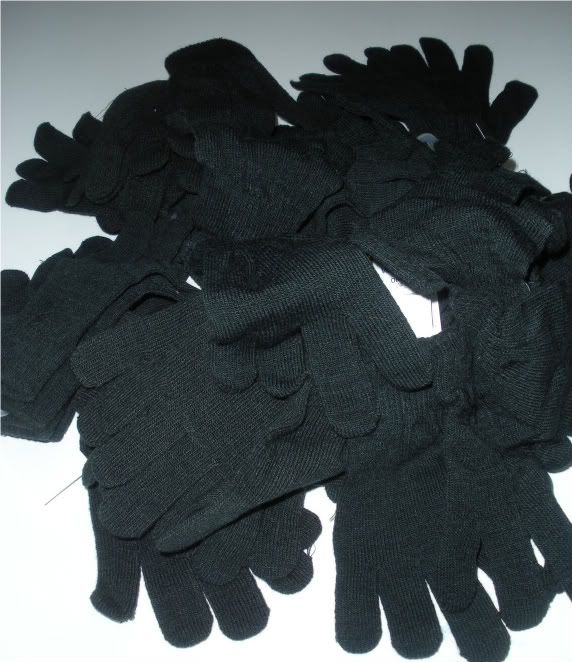
Happy spring! It’s time to walk Ice Dog outside again without worrying about slipping on the ice. It’s time to do yard work, Ice Dad. And it’s time to shop for magic gloves. At our local discount retail chain, those cheap, one-size-fits-all stretchy gloves – magic gloves – are 25 cents a pair. I bought 20 pair for $5.

If you’re new to figure skating, you’re thinking I’ve once again lost my mind. After all, that’s one big pile of gloves, Ice Mom. Well, kids lose gloves all the time. The gloves get holes. Figure skaters lend them to other figure skaters and they leave forever.

If you’ve been through a summer at the rink, you know that the only places that sell gloves in July are figure skating stores, and they’ll sell ‘em to you for $4 – 8 a pair. Let's do the math. 20 pair at $4 each is $80 worth of gloves. For my money, I'll take the ones on clearance, thanks.

When you find the gloves on sale, buy black ones. Resist the temptation to buy pink, purple, or patterned gloves. Yes, they’re cute, but when your skater loses one pink glove, she won’t have another one to match. Buy all black gloves and then losing one isn’t a big deal. Just match it up with some other black glove.

Black gloves are good, too, because they don’t show dirt like white gloves and your figure skater can wear them on warm-up ice at competitions.

So, happy spring, everyone! Don’t forget that this is your last time to buy gloves at a reasonable price for the next six months. Well, that is if you don’t live near me. I'm pretty sure I cleaned out the shops around here.

Update: From reader Jillybean, who offers a caution: You really shouldn't be borrowing other skaters' gloves because they might be wiping their noses on them.

Do you have a question for the Ice Moms? Do you have a great idea for a post you'd like to read? Are you an expert and want to write something for everyone's benefit? Wonderful! Please contact me at icemom.diane@gmail.com.

Ice Mom's Summer Camp Survey

Tuesday, March 16, 2010

Review: MySkatingMall.com

PSA Master-rated coach and 2003 World Team Member Ryan Jahnke has been working hard on his new online concept: MySkatingMall.com. It’s not just another online retailer. This is one that gives back to local figure skating clubs.

MySkatingMall.com will be the link between buyers all over the world looking to save money on gently used figure skating gear and sellers who want to clean out their closets. The best part? Five percent of the sale goes to the buyer’s home club. Sellers must donate at least 2.5 percent  to their figure skating club, but they can donate more of the sale amount, too. Users must be 18 or over to join the free online registration. Jahnke is very careful to make the site family-friendly. He includes a video of himself explaining that users should report inappropriate content so he can remove it from the site.

Until March of next year, listing figure skating items for sale on the site won’t cost you anything. After that, listings cost a flat $1 for an entire year, or until the item is sold. Sellers can improve their listings with low-cost upgrades like title bolding, featured listing, and better placement. All transactions are done through PayPal, so users will need a free account at that secure site.

MySkatingMall.com also has online retail partners who sell new figure skating items. You’ll recognize names like Lauren Downes’ Sk8Strong off-ice DVDs, Annette Thomas’s balletforfigureskaters.com, Champion Cords, Sk8Mix music, and Brad Griffies custom skate outfits. Jahnke is still searching for online stores as retail partners, so the list grows all the time.

As of this posting, the site is in testing. However, individuals can visit the site and poke around to see how it works. In addition to the sales, you'll find a blog, videos, and links to informational figure skating sites.This is a terrific time for figure skating clubs to sign up their club to benefit from their members’ sales and purchases, too.

I plan on telling our club’s board all about MySkatingMall.com and asking the board members to promote the site in the club newsletter. I’m for anything that saves me money as a figure skating parent and brings down my ice costs at the club. Great idea, Ryan! I wish you success!

Ryan's full site launches on Friday, April 26.

Have a question for Ice Mom or the Advisory Board? Do you know a figure skating expert who would be a good fit for The Wednesday Ask the Expert feature? Have a suggestion for a post? Awesome! E-mail me at icemom.diane@gmail.com
 
Ice Mom's Summer Camp Survey

Monday, March 1, 2010

The Talk: How Much Does Figure Skating Cost? You’re Kidding, Right?

Note from Ice Mom: The comments for this post are amazing! Thanks, readers!

Last week Ice Dad and I had the talk. You know the one: it involves budgets and numbers and bills and holy cow! We spend how much on figure skating?

Yeah, that’s the one - the one with the raised voices and red faces.

I’ll be honest with you: figure skating isn’t cheap. In fact, it’s expensive. I try hard to keep Ice Girl’s total figure skating expenditures to $800/month. If you’re new to figure skating your reaction will be: no way – that’s insane. If you’ve been smelling the Zamboni fumes and shivering in the stands for more than a year your reaction will be: wow – that’s not much.

I know good people, sane people, who spend easily twice what I spend. Three times, even.

Ice Dad’s struggling with the amount of money we spend on it, and I’m in denial.

As you know from a previous post, Ice Dad and I love what the sport has taught Ice Girl. She has drive, ambition, and goals. She is fit, active, and strong. She has a champion attitude and knows how to win and lose with grace. These aren’t just skating skills, these are life skills.

But it’s hard to ignore the fact that we pay $10k/year for those skills.

To that end, you’re going to see a few changes around here. I’ve changed my posting frequency from just once a week to Mondays, Wednesdays, and Fridays. I’m working on moving my blog to icemom.net and I’ll be selling some ads, too. (If you’d like to advertise here, let me know!) My goal is to move the site in early April.

I hope you stick with me through the changes. I hope I don’t have to buy ramen noodles by the case.

So, ice parents, here’s the awkward question: have you and your significant other sat down for the talk? Well? How’d it go? I know plenty of gals at the rink who keep their husbands in the dark about their figure skating spending. Are you one of them? How do you justify your ice spending?

Update: From reader Ateam On The Edge, who is an ice mom of an Olympian, and a blogger, too: On the Edge of Skating. You really don't want to know the expense at the elite level. Suffice it to say that we're mortgaged three times, something I do NOT recommend unless you are relatively sure your skater is committed. Be aware that finances is one of the biggest reasons for marriage problems, so tread carefully here.

There is no great amount of support until your skater gets to the medal levels at JNs or Nats in Intermediate or Novice. More financial assistance is opening up now, but it is scarce. Check the USFS site for information.

If your skater has started to have a track record of medaling at the non qualifying level, start to explore the New England Amateur Figure Skating Foundation. They don't have a website, but many skaters (including ours) have been benefiting from this source for years. It requires a lot of proactive work on your part.

Write them for a brochure to see how it works:
NEASF P.O. Box 6881; Providence, RI 02940. NOTE: You do NOT need to live in the Northeast.

Update: From reader Helicopter Mom, whose husband did a double-take. Helicopter Mom has a blog, too: The Life and Times of a Helicopter Mom. Once, at a family function, my cousin told us how much they spend on "club soccer" and I countered with something like "That's nothing, we spend over $100 a week on skating" and my husband spins around and says "What?!" to which I responded "Approximately..." or something equally inane. To be honest, I think we spend about half of what you do, but with the economy the way it is now, even that is a struggle. And money we probably shouldn't be spending. But how do you stop spending it when you see the results?

Update: From reader Anonymous who homeschools her figure skater and has found the only bargain ice time I have ever heard of: [...] our figure skater would not be able to skate if she went to school because the cost would skyrocket. We are able to take her to public skating from 11-1 every weekday at a cost of $2 a day...we get 10hrs. of ice time for $10!!

Update: From reader Sk8nLane who avoids talking about expenses with other people: My biggest challenge is when I am asked by people outside the family about the expenses. I want to give an honest response, but also do not want to share details. We have 3 very dedicated skaters in our club and each family travels to get what they need when it is not available here. We have all chose to do this for our children, but many do not understand why we would make this choice if we are not raising an Olympian. So rather than discuss why I usually try to avoid the conversations.

Update: From reader Xan, who is a figure skating parent, coach, and adult skater. Xan's blog is Xanboni!: I'm not sure to this day (3 years after the competitive career ended) that DH is aware what figure skating cost. I still feel kind of guilty about it. The year she went to Jr Nats, we did in fact end up taking out a home equity loan. But I cringe when I hear about parents who do that BEFORE the competitive success comes.

Update: From reader Jozet at Halushki: The hard part for us is that with three children - all extremely talented and amazing, of course ;-) - we don't always spread the money around evenly, just as we can't always spread our time among them evenly. Sometimes one gets a little more for a while, and then another gets put on hold while the other sibling gets resources of time, money, and attention. It's a balancing act, and we're hoping more than counting on the fact that we're getting it right

Update: From reader Barbara, a new skating mom: My husband is "Ice Dad." He takes the girls to practice and classes, so he is very aware of the cost. We discuss, frequently right now, how far to go with this. They are both preparing for their FS1 test, so I expect they will be FS2 by the end of the month. We hope that they will want to continue to move forward (one is a bit more inclined than the other), and more than that, I hope we can continue to afford the cost of skating. [...] We are at about a $100 a week. Each. Not counting skates. Or dresses. Uh, oh.

Update: From reader PrettyBowtie: A coach I know competed at nationals/worlds/winter olympics with her brother when she was a teenager. They had no idea how much the sport cost their parents- including their marriage. She had the "aha" moment in her 20's and is still trying to work off the guilt that the sport she loves cost her mum so much (she's in her 40's now and is still going).

Update: From reader Mike McGuire who seems to be channeling my husband. I'm telling you, I thought it was Ice Dad at first: Wow - I am somewhat in shock at the people that haven't had a true discussion about expenses with their spouse. My first question would be "How would you feel if you found out he had a $10k per year habit?"

Update: From reader Renee: The best advice I ever heard from a skating mom who has seen it all and done it all in this sport: "Skating is a wonderful sport, but no gold medal is worth it if you as a parent end up in either bankruptcy court or divorce court." That thought put skating in perspective for me and my parents and it's advice I dole out to skating parents often!  

Update: From Advisory Board member and parent of a Junior Nationals gold medal winner, PairsMom: Here are some ways that our figure skating "family" at the rink saves money because we all know that this sport is outrageously expensive, although I've talked to some hockey moms and in most cases, they have us beat as far as cost, so we press on. Here is my list and if this is not going on at your rink among your child's coaches or other kids your child's age then YOU could probably get it started.

1. Travel together to share costs; hotel, rent cars, you CAN make it work. For longer competitions (3 nights or more) - get the kitchen and split between 2 families it's worth it!
2. We pass down skating practice wear and competition dresses, trade dresses if you have one that your skater is not wearing.
3. Become an ice monitor if your rink allows you to get a credit for your ice time.
4. Resell the skates and if that is not possible, resell the blades.
5. Volunteer on the club board, some clubs offer a discount on club membership for volunteer hours.
6. Have your skater save their money from birthdays, holidays, or small jobs to help pay for competition "goodies" like the tshirt/sweatshirt or maybe they could pay for a portion of their practice clothes or new skates.


Update: From reader jumpingbeanmom: My hubby hates what it costs- I keep a fund for sports from my paycheck into a separate account to pay, so he is not completely (but somewhat) aware of the cost. I also travel for my job, so am fortunate enough to get many free hotel rooms for competitions from my points. We don't eat out, drive old cars, and I pack lunch and dinner almost ALL the time. All our extra money goes to this sport. I am sure we pay close to $1000 a month for the youngest competitive skater.

Update: From reader Alice in Wonderland who wants to leave the amount she spends on skating down the rabbit hole: Never saw so many comments so quickly! I'm getting a good chuckle out of it all. I'm a numbers person, and just finished producing all my quicken reports for annual tax time, and guess what annual cost I avoided...yes, skating.

Update: From StupidDad, who sounds so much like Ice Dad that I wet myself: I am proud of what my daughter has accomplished in Figure Skating. She is talented and works very hard. However, I am not proud of this Sports at all. I feel ASHAMED and STUPID when I mentioned to people that I spent $800/month for a Sport/Hobby!

Update: From Kates, a former skater and current coach: My dad always knew how much we were paying, but I always knew that I'd get less guilt if I asked my mom to write the checks.[...] Ultimately, the final word from my mom was that it was worth it for my mental health. She remembers how miserable I'd be on Sundays before going back to school, and how going to ice dance in the afternoon would bring me back cheerful and happy. 

Update: From reader Anonymous who paid her way through skating: From my experiences currently and as a teenager I would highly recommend making your skater financially responsible for their skating. Having to pay for it myself made me realize how precious my lessons and ice time were and are, and make me use them wisely. I also realize what I am/was sacrificing in order to skate.

Update: From reader Jumpingbeanmom: I know college is important, but can you really put a price on something that gives you confidence, perseverence and all the other experiences of skating? There is nothing wrong with going to a less expensive local college since the money was spent on skating

Let us know in the comments how the talk went. Really, it’s O.K. We’re all friends here and it’s perfectly fine to comment as Anonymous. You might even feel good about admitting just how much you spend and how much you hide under the rug. I promise that your husband won’t hear about your spending from me.

Have a question for Ice Mom or the Advisory Board? Are you an expert and would love to share what you know? Is there a post you want to suggest? Great! E-mail me at icemom.diane@gmail.com.

Ice Mom's Summer Camp Survey

Thursday, February 25, 2010

Figure Skating Summer Camp Survey

It's nearly spring and time to start looking at figure skating summer camps.

The trouble, as I'm sure you've noticed, is that parents have no idea which figure skating summer camp would be the best fit for their child.

To end the confusion and to lend some order to the chaos I've created a camp survey.

Please consider this an invitation to take the survey and help other ice parents choose a summer camp intelligently. To my skater readers - yes, you can fill out the survey, too!


Thanks in advance for your help! I'll keep the survey open until the end of March and share the results with everyone in April.

Had a good camp experience? Had a lousy one? Please fill out the survey and leave a comment here, too. Let's share our knowledge!

Update: Reader, coach, figure skating parent, and adult skater Xan of Xanboni! makes an excellent point. So excellent, in fact, that I'm going make it big and change the wording on the survey to include her suggestion:

Don't forget to check out the many excellent day camp-style figure skating camps run by many local and municipal ice rinks, as well. Cheaper, closer, less intense.

Update/Note from Ice Mom: A survey taker wrote that she (?) was a skater, not a parent. Awesome! Thanks for filling out the survey!

Have a question for Ice Mom and the Advisory Board? Have a great idea for a post? Are you an expert in something that figure skating parents care about! Fabulous! Please e-mail me at icemom.diane@gmail.com.


Ice Mom's Summer Camp Survey

Monday, February 22, 2010

How-to: Find Professional Figure Skating Boot Fitters


This guest post is courtesy of my friend and master skate technician, R.H.

Question from a reader: I've been searching on the Internet for a certified skate technician or professional to advise us on new boots with little luck. We have a gentleman who visits our rink monthly and is excellent, but seems to bring a very limited supply of skates due to the nature of traveling. Is there a Website or resource that lists professionals by geographic location?

R.H.: This is a very good question! I'm not sure who is coming to your rink for fittings and what brand or brands of skates he carries, but ideally you should work with a skate fitter who represents several brands of skates and is (relatively, at least!) impartial. Skates are like jeans - Levis may fit your waist/hip/thigh ratio perfectly, whereas I can't find a pair of Levis that fit my frame to save my life! Every skate brand fits slightly different and offers features that may work better for certain foot types, so to have a fitter who only sells one brand of skate or who is very partial to one particular brand can be a hindrance to finding the boot that is best for you! An experienced fitter will measure you for several different brands (as each brand runs different in sizing and width) and then steer you in what he or she feels will work best for you, your foot type and your skate needs.

Unfortunately there is not a Website that offers this information. Each and every boot company has a list of retailers in your area that carry their brand of skates, but this is not a guarantee that you'll be fitted properly by someone who has adequate experience. The best method for finding a shop/person who does an excellent job is to first ask your coach. Most coaches do have an opinion as to the skate shop he/she prefers and trusts, and this advice is worth considering. If the coach doesn't have an opinion or you dislike the shop he/she mentions, then my recommendation would be to ask AT LEAST 5-10 people actively involved in the sport WHOSE OPINION YOU RESPECT (if you are willing to travel, even ask around at competitions, skaters who are novice, junior and senior most likely didn't get to that level in consistently poor fitting boots, so their opinion will be worth a shot). The key is to ask a variety of people, and if necessary, you may have to travel a good distance.

How far you may ask? Well, many of my customers come from within an hour's drive of my store, but we do have several customers who drive 4-6 hours each way for fittings and sharpenings. That may seem like a long drive (and to me it is), but considering that the skate is the foundation of everything the skater does, it is important that the equipment be fitted by technicians who are experienced and can give you the benefit of their knowledge.

Question from a reader: Does anyone know of any formal training courses offered for this?

R.H.: Another awesome question! I wish there was...unfortunately there is none. The skate companies do offer some educational support to their retailers, but the training mainly comes from working with a highly experienced boot fitter on a daily basis for at least several years. Best of luck in finding the skates you deserve!

Thanks, R.H.!

Update: From reader Anonymous who thinks driving to a good skate shop is worth it: It is so important to get skates that fit properly! The last time my skater was complaining about the fit of her skates, I assumed that she had just grown - again. We took her to a different skate shop (based on recommendations) and discovered that her feet had not grown. Not only were her boots the wrong size but the boots were just plain wrong for what she was doing (also based on her height and weight). My skater was well on her way to serious foot problems. [...] We are several hours away from our closest skate shop (and the new shop is even further) but the trip is worth it! I like to save money wherever possible and skates are definitely the place to apply those other savings!

Update: From skate coach, skate parent, skate blogger, and Advisory Board member Xan of Xanboni!:  Just another word from a coach--when you buy your first "real" skates, please go to a reputable dealer, not to SportMart, or the bike shop, or that hockey guy, or the used skate store, or grandma's garage. Get the tech or the salesperson to give you a primer in skate technology and don't PLEASE don't lie about the skater's tested level.

So many people quit skating because they think they're incompetent, when really they just have the wrong skates.

Update: From reader Jillybean: Remember that just because someone works at the rink, it doesn't mean that they know how to properly fit a skating boot. I had a bad experience with my first pair of "real"skates. I was fit by the guy at the rink, and I ended up with a pair of boots that were too big, and much too strong for my skating level at the time. I ended up with some serious foot problems. My doctor wanted to operate on my foot to fix one of the problems and told me that after I healed, I would need to get custom made skates. I decided to skip the surgery and go straight to the custom boots, and the problems that I had just went away!

It's worth it to spend a little more to get the right boot.


Update: From reader poorer but wiser, who had a bad fitting experience: [...] sometimes even an experienced pro can screw up. Do as much homework as you can before hand, read reviews from other skaters using various boots and try to be as educated a consumer as you can possibly be. And don't let the fitter strong-arm you into buying something you're not comfortable with ...


Have a question for Ice Mom? Want to write a guest post? E-mail Ice Mom at icemom.diane@gmail.com.

Monday, December 28, 2009

How-to: Deal with Ice Rink Bullies

Note from Ice Mom: The comments section for this post is awesome. Thanks, readers, for your advice and personal anecdotes. I'm sure you've helped a lot of frustrated figure skaters.

Hello, Readers. This post is courtesy of a reader who is having problems with higher-level figure skaters who are making her ice time miserable. Here’s the e-mail:

Icemom-

I regularly follow your blog and was wondering if maybe you or your readers could help me out with an issue I'm having. I'm 19 and started skating merely 6 months ago. I've come to skating from 15 years of dance training so I'm not struggling, and have a lot of family support in choosing skating over dance. I realise I've started far too late and am far too old to get anywhere besides competing in adult divisions- and that's the cause of my issue.

At my rink I have the earliest ice time, 4 a.m., with my coach. Straight after at 5.30 is an open figure session, where I work on what I've been assigned (at this point, edges, balance and jump preparation). However this is rather impossible as the 13-16 year old "senior" level skaters have taken it into their heads to taunt me and interrupt my practice by either stopping directly in my path, entering jumps or fast spins very close by. I've informed my coach, and she's seen this going on; however, she doesn't coach any of the girls and isn't ice marshal for that session, and so can't tell them off. She's spoken to their coaches who refuse to acknowledge their students are capable of such things. I don't want to move rinks because it would be far more travel and I would lose my coach.

It's at the point where I'm leaving the rink straight after my lesson to avoid these girls, because their actions and attitudes are too much to ignore.

I put this question out to my advisory board and here’s what we came up with:

Ice Mom: This problem happened to Ice Girl, too, especially when she was new. I think it has a lot to do with the culture of the rink. Fortunately for Ice Girl, the other coaches and the ice monitor were supportive of Ice Girl when an ice troll plowed into her and left Ice Girl sprawled on the ice. We were new to the club, so the other coaches and the ice monitor took the problem to the board and the board put the troll on probation.

However, it sounds like coaches and ice monitors aren’t supportive of you. Document a week or two’s worth of incidents and include details like the skater’s name, the problem, what you did to correct it, and the result. Approach your skating club’s board with your list. Point out how hard it is to grow a program if new skaters don’t feel welcome.

You pay the same amount of money as the mean skaters to be on that ice. You don’t get a discount if folks are mean to you. Fight for it.

(Ice Girl has since tried killing the ice troll with kindness and the troll has softened some and is nice back to Ice Girl. Ice Coach and I think that Ice Girl should leave the troll alone, but I.G. is a nice person. Nicer than I am, obviously.)

Ice Coach: I say: I feel her pain. Even if there isn't much her coach or the others will do about it, I would tell her not to give in. She has just as much of a right to be there as everyone else. Just because she is a lower level [skater] doesn't mean she has to be the one that moves out of the way all the time. She should stand her ground and make the others move out of her way sometimes, too. Or say something to them when they stop in her path like "excuse me." If she confronts it, in a nice way of course I bet the younger skaters will get the point.

Remember when [the ice troll] decided to jump on top of [Ice Girl and me] last year during a lesson? All I said was "excuse us." Of course, it wasn't the nicest voice, but guess what - she didn't do it again. I think she would just rather people ignore her while she stomped off.

C.L.: I think this gal should talk directly to the skaters in a non-confrontational tone. For example: "I just wanted to let you know that I'm uneasy if you get to close to me while I'm on the ice." "I'm not as experienced as you and I don't want to cause an accident." "I really enjoy skating but I'm concerned for my safety when you guys spin and jump very close to me." If that doesn't work then I would talk to the parents of the skaters.

PairsMom: If the coach has seen no change even after speaking to the other coaches about their student's behavior then it is time to set up a meeting with the Figure Skating director at the rink. This meeting should be brief (15 minutes) and if possible the coach should try to attend with the 19-year-old skater. Also, the figure skating director could post a list of Freestyle Rules and Guidelines on the rink website AND in the monitor booth. Each skater (and/or parent), regardless of age or level, needs to sign a freestyle contract stating that they will abide by the rules and regulations posted by the figure skating director, etc. Also, it might be helpful if the 19-year-old skater brought along some friends, other skaters her age/level to skate on the same sessions with her.

By the way: congratulations to PairsMom’s son and his partner, gold medal pairs winners at U.S. Junior Nationals in December 2009!

S.F.: I forwarded this problem to my daughter's ice coach and she suggested the following: This should be brought to management's attention. Coaches are supposed to be role models and teach more advanced skaters to be thoughtful of younger or lower level skaters. [Our rink] has rules posted and if they are not followed, we meet with the coach, skater & parent. If the skater doesn't want to cause issues, I would ask for the rink's freestyle rules first.

Bottom line: This is an issue of safety, etiquette, and money. No one should bully other figure skaters off the ice or jump so close that it's a safety issue. Take it up with the skaters, the coaches, the parents, and board/rink management. It’s not fair. Don’t let the ice trolls win.

The comments section is terrific for this post. Here's a sampling of what folks are saying:

Update: From Reader Heyfigureskate: This year, I have finally sucked in my pride and when [this skater] would perform a really nice move, I would say "Good job!" or when she would fall, I would ask, "Are you okay?" Since, when she comes to the rink (rarely) she compliments me as well. So a good turnout I suppose...

Update: From Reader Anonymous: All I can say is that you have every right to be out there and practicing. Believe me, they were beginners at some point. You don't need to be rude, but stand your ground.

Update: Terrific comment from Xan of Xanboni! (read it all in the comments section):  If you are following basic practice ice protocol-- don't stand in the middle of the ice, keep moving, hold to standard jump and moves patterns, yield to program run throughs and lessons, etc.-- just hold your ground. They will pull back at the last minute. If you are called on it you can either plead ignorance, like they are doing, or say, "oh I thought the general protocol here was never yield to another skater, since that's what always happens to me" (a wide-eyed innocent, yet subtly sarcastic delivery would be called for here.)

Update: From reader TNT: Sometimes newer skaters are a hazard because they are either oblivious to other skaters, oblivious to the rules (lutz corner, spin areas, right of way goes to lessons and those doing their program) or unable to get out of anyone's way because they lack the skills to do so. Not sure if that is the case here, but if so the skater should seek a different session until they are no longer a safety hazard.

Sometimes newer skaters are not accustomed to how close other skaters may be on a freestyle session, and that can be scary. It's not always harrassment; sometimes a newer skater desires a wider "comfort zone" but on a high-powered or crowded freestyle session that's just not possible.

Update: From reader Season: I used to skate when I was younger and I'm also African American. Unfortunately, racism was and sometime is still a big problem in the skating community. My daughter and I have experienced skating trolls since we have been involved in skating because of racism. Many Caucasian skaters that are racist feel that African American skaters have no business being on their ice or involved in their sport. They feel that skaters of other race bring down the integrity of the sport and they doing anything possible to sabotage your chances of being successful. [...]

[...]It is important to remember that skating trolls are breed and created by parents and coaches that are not considerate of other skaters. These parents and coaches do not and sometimes refuse to teach their skaters respect and common curtiousy. Another problem is that most of the skaters that act this way are skating more than they are able to socialize with other people that are not skaters. Their whole life is skating and they have no balance in their lives. They loose their ability to socialize and act appropriatly around people who do not skate as much as they do. It is very sad. Because after skating is over they do not know how to be a normal happy person. I hope this is helpful. Adult skater and skating mom for 12 years, Season Williams

Update from the ice-troll victim: I thought I would give you an update on the Ice Trolls and the situation. Upon reading your entry (thanks to your panel!) I rang the Rink Director (who also arranges the Figure Club), my coach and the 5.30am Ice Marshal to schedule a meeting, which is in a week's time. I have both written evidence, other skaters who have witnessed the occurances and also some video footage- taping your routine can turn around to bite you!

I also had something to say about some of the comments given to the blog entry- a few people thought I was on practice ice above my level. At our club, if you've been in lessons for 6 or more months and are a member of the club, you can use practice ice. It's called 'Figure Ice' and the only requirement is the novice Aussie Skate levels, no jumps or spins if you don't want. I am well versed in where jumps, figures, spins, etc are to be executed, and being a dancer I don't have a large 'comfort zone'. These girls are using physical and verbal bullying.I just wanted to clarify that we don't use 'Freestyle Ice'- maybe it's an American thing? But all is in action to hopefully have them stopped.

If not, I'll try IG's route and kill them with kindness :)

Update: From reader Rosalie who gets an atta-girl award: I've had to deal with bullying, too, and it wasn't because I was new. The bullying didn't start until after I had been skating for a while. However, other coaches, the Skating Director, and the Ice Marshals were not helping (even contributing) to the problem. Eventually, I went with my now skating partner to general management (who mostly dealt with hockey and employees in the box office, etc.) to talk about my problems. I still get the cold shoulder, but the rest of the bullying stopped.

 Do you have advice for this skater? Please share your thoughts or stories in the comments.

Do you have a question for Ice Mom? E-mail me at icemom.diane@gmail.com. I'll do my best.

Monday, October 12, 2009

Figure Skate Boots and Blades: Not the Place to Skimp


I’m thrifty, even cheap, but I don’t resort to home dentistry. Sure, I brush my teeth, and I even floss sometimes, but I leave the root canals and fillings to my dentist. My teeth’s good health is important to me: I don’t want rotten, misshapen teeth. I want to chew food without pain and I don’t know the first thing about giving myself Novocain. That’s why I see a professional.

I’m the same way with figure skates. I just don’t know how to fit them on my own; although, I would love a shot of Novocain when it comes to paying for them.

Let’s say, for instance, a person orders her daughter’s figure skating boots and blades online. Being a practical soul, she orders the figure skating boots one size larger for her daughter because the kid is still growing. Practical Mom wants the boot to fit her skater in a year. Practical Mom also bought a boot that’s a pretty high level because she expects her skater to advance quickly. She buys the figure skating blade online and mounts it herself at home. Then she takes the new skates to a local sporting goods store where they sharpen recreational blades.

Practical Mom wants to save money, but she’s doing it in the wrong way. Let’s see where she went wrong and how to make it right.

Ordering figure skating boots online. Sure, you can save money and order boots online, but you have to be cautious. You have to make sure that the foot measurements and foot tracings are done properly – many folks get it wrong. If you order your boots online, you don’t have the benefit of trying on several pairs from different manufacturers. You don’t know that one manufacturer’s boot has a narrow heel or that another has a wider toe box. However, ordering boots online can save you money, especially if the skater has stopped growing. In that case, order the same boot; it’s pretty simple.

How to make it right: Unless you’re very experienced with skate fittings, visit a reputable figure skate dealer for a good fit. If you must order online, call the place you’re ordering from and ask them to walk you through the measurement and foot tracing process. See if they can recommend a certain boot for you based on the measurements.


Ordering a boot that’s too big. Practical Mom knows her kid’s growing, but what she doesn’t know is that the sides of the figure skating boot are reinforced at points that correspond to a skater’s foot size. If a skater is too small for the boot, the non-reinforced areas will take the impact. Renee from Rainbo Sports said that this kind of wear actually makes the boot break down, or crease, faster than a boot that fits well. Practical Mom thinks she’s smart to order a size too big, but really, she’ll be buying new boots sooner.

Boots that are too big also cause foot problems, Renee said. A skater might compensate for the boot’s size by gripping the sole with her toes, which causes foot pain. Her heel might slip in the back and cause a bump on the heel. She could develop painful calluses, too.

How to make it right: Buy the boots that fit your skater’s feet. You can maybe go up a half size, but don’t go up any further than that. Remember that boot sizes don’t correspond to shoe sizes and every figure skating boot manufacturer has a different size chart. You must measure.


Ordering a figure skating boot that’s too advanced. Practical Mom dreams of doubles and thinks that the heavier the boot, the better her skater will perform. This is a lousy idea. Your skater will skate like she’s in cement shoes because the boot’s too tough for her. If you want your skater to quit, buy a boot that’s way too stiff.

How to make it right: Your skater needs to build up her legs and her feet in order to tolerate an advanced boot, Renee said. You’re better off increasing the boot incrementally than jumping from the rental skates your skater used in Basic 4 to a skate that kids doing triples require.


Skipping the heat molding step. I think Practical Mom skipped this step because she doesn’t have a convection oven at home. Few people do. You can’t heat mold a figure skating boot in a conventional oven, so don’t even try it. Heat molding figure skating boots is a fabulous thing. It molds the boot to the skater’s foot and smoothes the break-in process for the skater. Heat molding reduces painful blisters, rubbing, and even scars.

How to make it right: If you have ordered your boots online, take them (and your skater) to a skate shop. Dress your skater in her skate socks, too. Request that the shop heat mold the boot. They’ll probably charge you for it, but it’s worth it.


Mounting the figure skating blade herself. You’d think that mounting a figure skate blade to a boot is as simple as drawing a straight line down the center and screwing the blade down on top of the line. However, even a small variance in the mounting can make holding edges and spins difficult for your skater. If you try to adjust the mounting, you’ll weaken the sole and invite water damage. Better to get it right the first time.

How to make it right: Again, if you’ve ordered the boots online, take them into a reputable dealer for the mounting. Yeah, they’re going to charge you, but you’ll save your skater a lot of frustration in the long run and have a more solid boot.


Inexpert figure skate blade sharpening. Blades are pricey and have only so much life in them. An inexpert sharpening can ruin a blade by taking off way too much metal or rounding the blade Ă  la hockey skates. Blades cost $150 on the cheap end and $500+ on the expensive end. For my money, I want the most life out of that bugger.

How to make it right: Take that blade to a reputable skate sharpener. I know – it’s hard to know who sharpens correctly. Ask around. People will tell you. (Someday I’ll write a post about how to know if a sharpening is good or not. Until then, ask around.) I drive Ice Girl’s skates to a shop 90 minutes away because I know that Renee at Rainbo Sports sharpens well. You know I’m cheap, but I’m also not willing to risk my daughter’s Vision blade on just anyone. That’s $500, people. O.K. I bought it used, but still. I’m not going to pay for the local used sporting goods store or hockey shop to ruin it.


The bottom line: scrimping on skates isn’t really saving you much. Look. I want to save money as much as the next person. Perhaps more than the next person: I adore bargains. But, I save money elsewhere: I sew dresses (you can buy them online), I make Ice Girl practice moves on cheap, empty public sessions, and I bought used blades (with Renee’s approval).

Update: From reader Anonymous: The recommendation charts are somewhat helpful, but as a skate tech who works with skaters for a living, I can tell you the charts are not always 100% on the money. The charts don't usually take into account the skaters body size, weight, hours per week he/she skates, how he/she breaks down boots, etc. I have customers who are 65 lbs. and working on Double Axels and the boot I recommend for them is not going to be the same as the boot for a 150 lb. man working on the same jump. Also, there is a major difference between a skater who is a "test" skater at, say, the Intermediate level, and an Intermediate lady who qualifies for Junior Nationals. So I always look at the "whole picture", not just the chart.

Update: From reader Helicopter Mom: Take the coach's advice too. They have WAY more knowledge about all kinds of skates than the other moms at the rink.

Update: From reader Ethelapple: Heat molding is great -- and so is "bumping out" the boot to get a little extra time before having to buy that next pair!

Update: From reader Anonymous: In general, I have found that an excellent pro-shop may have better boot and blade fit information than the coach.

What do you think? Let me know if you think I’m way off base with this one. Better yet, let me know if there’s a way to save money on figure skates that I don’t know about. Have a horror story? Share that, too!

Sunday, March 22, 2009

Figure Skating Money: Trust Fund or Lessons?


A 26-year-old single friend of mine from work said something that’s been nagging me for weeks. Here’s what she said:

Why don’t you take all that money you’re spending on skating, put it in an account, and give it to Ice Girl on her 18th birthday?

She went on to say that Ice Girl could make do with school-sponsored sports. Her glum expression would clear up, Single Friend promised, when I presented her with this nest egg at graduation.

It’s not like she’s going to the Olympics, so why spend all the money?

I imagine you’ve heard similar comments from friends and that you’ve lain awake at night wondering if figure skating is the right place to spend thousands of dollars in this uncertain economy. I’ve talked with Ice Dad, Ice Grandma, and Ice Girl about Single Friend’s comments. Here are our responses:

  1. From Ice Grandma: It’s clear Single Friend doesn’t have children. What parent could refuse a child an opportunity to enjoy a sport she so clearly loves?
  2. From Ice Dad: We’re paying for self-esteem and drive. Ice Girl is a different kid than she was just a year ago. She has goals and she is determined. And she’ll always have a life-long love of fitness and the sport.
  3. From me, Ice Mom: The Olympics is not the goal of every kid who has ever played high school basketball or swam in a pool. Yet, as communities, we support these programs with our tax dollars. Why? Because kids benefit. They learn to strive for something and they are active. Studies show that athletes do better in academics and later life.
  4. From Ice Girl: I wouldn’t want that pile of money. I want to skate. Now. Is there any walk-on freestyle ice tonight? Can you call my coach for an extra lesson? Watch me try out my axel. No, no. Watch me again. Hey, Mom, check this out…

That, in my opinion, is worth its weight in diamonds.

Sunday, September 28, 2008

Learn to Skate is the best bargain in figure skating

I've written about my deep love for Learn to Skate before on this blog. I swear, I'm really in love today.

Learn to Skate is the only figure skating bargain that I know of. For $90, I can get Ice Girl six 1/2-hour lessons plus 1/2-hour practice ice. Since she's done with the basic lessons and freestyle lessons, it's pretty much a 1/2-hour private lesson. Let's see: that would normally cost $17 for the lesson and $10 for ice time. Through Learn to Skate, I pay $15.

I'll sign Ice Girl up for Learn to Skate until she goes to college, I swear.

Ice Girl is only 12, but Ice Coach (the LtS director) graciously offered to let Ice Girl assist with the little Snowplow Sams for 1/2 of the Learn to Skate hour. Ice Girl is learning a skill - coaching (albiet little ones) - and when she turns 14, she'll be able to receive a paycheck for it. She's already dreaming of the music downloads she'll buy.

Me, I'm such a groupie. I was snapping photos through the rink door of Ice Girl scooping the tots off the ice. Another parent asked which kid was mine.

The one in the blue-striped shirt.

He was completely confused.

Err. The tall one. Blonde. With the pony tail. She's helping that small boy to his feet.

Oh! She's an instructor, he said.

Well, sort of. She's learning. It's her first day.

We chatted. His kid is three. Ice Girl had the little one picking up colored rings, skating over to some cones, and stacking the rings on the cones. When the cone was full, Ice Girl scattered the rings again. That poor kid looked so disappointed that she'd ruined his hard work. Ice Girl, however, looked pleased, gushed about the kid's ring-gathering skills, and scooped him up occasionally.

She called one of her friends when we came home. "I just got home from work," she said. "It was great."

See? I love Learn to Skate. In Learn to Skate, Ice Girl learned to swizzle, then jump, then spin. Now she's learning responsibility.

It's the best bargain in figure skating, I swear.

Wednesday, September 10, 2008

Cheap freestyle ice: I do not need an intervention!

At club ice last night, I found out that a hockey rink 20 minutes north of my house has open freestyle ice at 6 a.m. on Wednesdays and Fridays, starting in October.

“And nobody goes,” this other mom told me.

She said that for $10, Ice Girl can skate from 6 a.m. until 8 a.m. There might be four other girls on the ice. That’s it.

I was excited, of course.

When I left the rink I called Ice Dad.

“Guess what? Sauk City has $10 6 a.m. ice starting in October and nobody goes. Isn’t that great?”

“You need an intervention,” he said.

If loving early, empty ice at $10/2 hours is wrong, I don't want to be right!

Ice Girl is on my side with this one. She’s pumped because her favorite ice is empty ice, no matter what the time. My favorite ice is cheap ice. We both win here.

“Are you sure you want to add another 6 a.m. to your week?” I asked her.

“Mom. Mo-ooom. Mom. It’s fine. I’d rather get up early so I can do my homework after school,” she said. (She hates doing math in the van.)

I don’t need an intervention. What I need is a map to that rink. And cheaper gas. And a fog horn alarm clock. And to begin a coffee addiction. Tea’s just not cutting it.

Monday, August 25, 2008

Figure skating camp: is it worth it?


Ice Girl’s been back from camp for almost a week. Did she learn anything?

Her flip is better, but most landings are still with two feet. Olympic coach Kerry Leitch called Ice Girl a problem child and suggested that we, her parents, could qualify for some sort of monthly check because of Ice Girl’s problematic two-foot landings. I’m going to check into that…

Olympic coach Alison Smith gave Ice Girl a private lesson, during which she had Ice Girl do seven loops in a row while holding half a hockey stick. The hockey stick’s a good idea because it keeps Ice Girl’s arms moving in the same direction at the same time. Ice Girl said that private lesson on jumping was very helpful.

Ice Girl had a private lesson and classes with Olympian Caryn Kadavy, whom Ice Girl idolizes. Kadavy instructed a class on costumes and Ice Girl has been sketching ever since. I have a dress cut out in my sewing room right now, but Ice Girl has a new design for a competition in November. I’m grumbling, but we all know that I’m going to give in.

Ice Girl had lessons in jumps, spins, and using a rotation trainer. She also raved about a wobble board that Smith used…now we have one of those, too. She learned about costumes, choreography, grooming, edges, power stroking, and goal setting.

Ice Girl ate breakfast at 7 a.m., worked until noon, had lunch, and worked until 5 p.m. Lights went out in the dorm at 10:30 p.m., but the noise continued until after 11. We picked Ice Girl up from camp and she was exhausted. She slept until noon the next day.

Camp wasn’t a magic pill: Ice Girl’s flip is still problematic and her sit spin is more sit than spin. However, she’s energized. Tonight she wants to help me sew her dress so we can begin on the next one (I am a sucker). She wants to do off-ice training in her off time.

She’s hoping to go back to camp again next summer. $500 isn’t cheap, but I’m sure I’ll spend it again next year. Ice Girl made great friends, learned a lot, and came home with drive and energy.

Thursday, July 3, 2008

Newbie: I love Learn to Skate


I love Learn to Skate. I never want it to end.


Ice Girl has advanced so many Learn to Skate levels in the past eight months that Learn to Skate will soon come to an end.


I'm proud of Ice Girl, I really am. However, Learn to Skate is a great scheme.


I pay $90 for the six sessions of Learn to Skate. That's $15 per session, which is 30 minutes of coaching and 30 minutes of practice ice.


In the world of club ice, 1 hour of ice costs me, oh, $11-12/hour. That's not including the $35/hour coach, or $17.50/half-hour coach.


Yep. I did the math, too. Learn to Skate is a bargain.


It's really a bargain when I consider that Ice Girl is in Freestyle 4 and has a coach all to herself.


I can see the end of LtS on the horizon and it makes me a bit sad. Ice Girl's coach, Ice Coach, also runs Ice Girl's LtS program. Ice Coach said we can keep her in LtS for as long as I want.


We all know what "As long as I want" means to me: Ice Girl will be in LtS until she graduates from high school! :)