Friday, February 12, 2010

Rant: Figure Skating Is a Sport

On the way to 6 a.m. ice, the morning team radio guy said something like this:

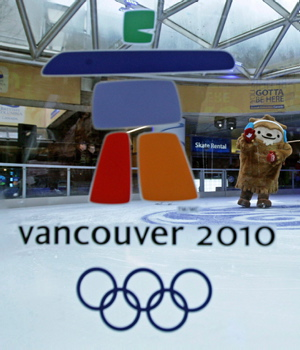
Tonight’s the opening ceremony for the Winter Olympics. You know what that means, don’t you? Two weeks of figure skating. Figure skating isn’t even a sport.

Hoo boy. Figure skating isn’t a sport? I’m sure this d.j. isn’t the first person to say this, and I bet you all will be hearing similar words during the next few weeks.

Now that I’m calmer and have finished stomping around, I’m ready to tackle this misguided argument.

Myth: Figure skating isn’t a sport because it’s set to music. It’s an art, like ballet.

Reality: Well, it’s both. Yes, there’s an artistic component, but it’s strongly linked to the athletic component. In other words, it’s not enough to jump, swizzle, and spin. Skaters have to make it look easy and beautiful. That, readers, is athleticism. All kinds of people can score goals, run fast, or jump high in a sloppy way. Figure skaters can’t. Jumping takes amazing muscle control and power, especially the quad jumps we’ll be seeing in the men’s division. Height, speed, agility, form, power, and art and beauty. It’s a sport with a bonus: art.

More reality: You think other sports aren’t set to music? Think again. High school basketball teams have the pep band, major league baseball has an organ, and professional football teams have cheerleaders at halftime. Sure, they don’t pass, kick, or bat to a rhythm, but there’s a strong musical component all the same.

Myth: Figure skating isn’t a sport because the judging is subjective.

Reality: It’s pretty hard to name sports without some sort of judging official or referee. Racing sports are pretty cut-and-dried, but team sports all have refs. We’ve all seen a heartbreaking game where the outcome rested on a ref’s bad call. The International Judging System (IJS) isn’t perfect, but the system attempts to quantify a figure skater’s elements and assign them point values. It’s an effort to make subjective scoring more objective. (I’m not going to start an IJS debate here because I’m simply not smart enough. If you’d like to have a debate in the comments, feel free.)

Myth: Figure skating isn’t a sport because figure skaters wear embellished costumes.

Reality: Beach volleyball players wear as little as possible. Professional football has cheerleaders in spangles and tassels. That’s not to say those sports aren’t sports. It’s just that the dress conventions are different for each one. Figure skating is both an art and a sport, so it makes sense for the athletes’ clothing to have an artistic component.

Myth: Figure skating isn’t a sport. It’s just something that appeals to the female viewer and brings TV ratings. It’s entertainment.

Reality: Let’s face it: some sports play better on TV than others. It’s tough to watch hours of sailing. The Winter Games’ biathlon and the Summer Games’ modern pentathlon don’t get much airtime either. I’m not sure if it’s the number of events or the rifles, but I never see those athletes on TV. Figure skating is neat to watch on TV and even neater to watch rink side. Just because it appeals to women doesn’t mean it’s not a sport. Shame on you.

More reality: Ever been to a minor league baseball game? The entire game has a huge side show. Hand clapping, music, crazy mascots, bobble head promotions, spectator games, and sausage races keep the fans entertained while the real attraction – baseball – runs into extra innings. Don’t tell me that a huge part of the Super Bowl’s TV appeal isn’t the clever commercials and the halftime show (with or without wardrobe malfunctions).

Even more reality: Of course it’s entertaining! All sports are entertaining. This is recreation, people. Athletes love to compete in their sport and spectators love to watch. Making it entertaining and fun is recreation. Just because it’s entertaining does not cheapen it as a sport.

Updates: This d.j. riled you guys up, too! Here are some snippets from the comments.

Update: From reader and parent ebingley1973: Hooooo! I'd like to see him do what my daughter did this morning at 7am - and she is SIX!!!! Goof-ball.

Update: From reader Rosalie who has the bumps and bruises that prove figure skating's a sport: Bottom line: Figure skating is a sport, and no one who has actually done it, actually looked at the facts, really believes that. People try saying that it isn't in order to make themselves feel better, like it makes them cool or macho or something.


Update: From reader Andrea who argued with a Brownie Girl Scout (way to go, Andrea): Basically, a sport is anything that is physical activity with rules that can be done competitively. I'd say figure skating most definitely applies. :)

Update: From former show skater, reader, author, and blogger Ice Charades: I have two things to say to that: first, if you don't think skating is sport, then gymnastics, boxing, diving, freestyle skiing, even ski jumping which has a form component as well as distance should not be sports either.
Note from Ice Mom: Ice Charades has a funny book about show skating:
Ice Charades: Penguins Behaving Badly and Other Follies From the Road

Update: From reader, blogger, skating parent, advisory board member, and coach Xan of Xanboni!: If it's not a sport, I'm going to have to get all these kids to stop calling me "coach."

Update: From reader Sarah:  I bet that everyone's skating kids have better developed muscles, more endurance, and are 10 times tougher than the radio DJ.

Update: From reader Anonymous, who is insulted: I have known many a skater, including myself, who has broken bones, torn ligaments and ankles, got bladed in the leg and fell so hard they couldn't walk the next day. To the hours that coaches and parents spend freezing their butts off in a cold rink, this is demeaning. To the girls who have sacrificed it is cruel. Figure skating is among the toughest, hardest and most brutal sports in the world, but for me it is also the most lovable magical thing in the world.

Update: From multi-sport athlete dramaqueen: skating is the hardest thing I've done...and I've tried soccer, softball, t-ball, and ballet.

Update: From reader jumpingbeanmom: Are you kidding? My 9-year-old figure skater blew away her classmates on every aspect of the National Physical Fitness Test, all because she skates.

I’m sure I’ve missed other arguments. I’m also sure you’ve heard them all. Let’s dispel the myths in the comments, readers!

Monday, February 8, 2010

How Much Figure Skating Ice Time Is too Much?

Note from Ice Mom: As always, the readers of this blog have left terrific comments. The Updates below contain snippets from those comments. Check out the full comments section for the readers' generous sharing of experience and wisdom. Please share your own experiences, too! Thank you, readers!

Please see below for a thank-you from Cathy for all of your comments.

Cathy, who is a new ice mom, sent me this question:

My daughter (9 years old) has been taking private lessons for only a few months. We have been informed by our coach that she will need to practice at a minimum 4-5 days per week, 6 being optimum. Since I work fulltime, the only time I can get her to the ice is a 6 a.m. She would then leave to go directly to school - eating breakfast in the car. My daughter seems willing, but I feel as though it is too much to ask of a 9-year-old. What comments do you or your readers have about my concern? Has anyone done this with a young child and has advice?

I want her to advance and become accomplished in the sport, but we have modest ambitions overall - no desire to raise a national champion. However, sometimes it seems that there is no middle ground to be had in figure skating. It's an all or nothing commitment.

Here’s what Ice Mom’s Advisory Board has to say:

C.L.: This is really the dilemma in our sport. Where is the middle ground? If national skating is not the goal, is it necessary to skate six days a week? Maybe if your child wants to be the best at his or her current level, it is. Natural talent does go a long way, too. I've seen a lot of wonderful skaters that skate two times a week for a couple of hours.

Each family and child is different. My daughter would never survive 6:00 a.m. ice on a daily basis (neither would I), but then again I know some of our members whose kids are early birds and probably wouldn't have any issues with that. I do think that's a lot to ask of a nine-year-old if you’re not planning on being serious regional/sectional/national competitors. Some coaches only want the best of the best...those skaters and parents who are willing to sacrifice sleep, money, and time. Other coaches are more flexible...allowing for a slower progression. As with any sport...the more time you spend doing it the better you get, but that doesn't mean someone who spends less time still won't be better than you

Ice Coach: Bottom line: if that’s the coach’s standards and the family isn't ready for that commitment yet, find a different coach with values/goals that match your skater’s. That’s really the only option here in my opinion.

kel: Different coaches have different requirements of ice time. When we started with our coach (my daughter was 7), she skated two hours a week -- one during her private lesson, and one hour during Learn to Skate. Now that she is 9, she skates maybe 3 hours a week. I'm aware of other coaches that require their skaters to skate 10 hours a week (twenty during the summer). Certainly, other skaters have progressed more quickly than she, but she's happy with how she's doing as am I. So, I think this is a matter of different coaches have different requirements -- this of course results in different speed in a skater's progression.

As far as 6am ice goes, I'm a fan. Gets it out of the way early in the day -- as long as your daughter is an early bird. We did 6am skates for a while and I felt that it was better for my daughter than later evening skates, when she was just too tired.

Xan of Xanboni!: Crazy, I literally JUST put up a post about this, in response to a reader request. It's the latest post, but it also refers to this one: http://xan-boni.blogspot.com/2009/10/yes-please-practice-why-are-we-even.html about how to judge amount of practice needed.

More specifically, if this girl has been skating "a few months" she cannot possibly be any further along than low freestyle and that's a stretch unless the coach has been "cutting" her up. Nine years old is a little young to handle early morning ice on her own, but not unheard of. If she is planning to go after a high-level competitive career, then sure, 4-6 days a week is not unreasonable. But it's hard to see them having made that judgment this early on.

Really need more information, including skating level, whether the coach is proposing just practice or additional lessons, and whether the girl is also taking classes. If the child is willing to do this and follows through without complaining (much), the family can afford it, and the skater seems happy and progressing, it's not completely out of line.

HOWEVER, my initial reaction was that this family is heading for burnout. They need to build it more slowly.

S.F.: How many private lessons per week is this mom paying for? My daughter's coach prefers an equal amount of practice to lesson time. (ie 30 min lesson 30 minutes practice) At this time with synchro, homework and school activities we aren't doing a lot of practice. Just lessons.

I can say that when my daughter doesn't put in the practice time in to go with the lessons it takes twice as long for her to achieve her goal.

Mom, skater and coach need to reach a happy medium. Mom and skater also need to decide how big a commitment/investment that they want to make.

I think that skating is something that is very individual and the level of commitment is the based on the desires of the skater and the parent willing to put the time and money in to the lessons and practice. If the Mom doesn't want do the high level of commitment that the coach wants then she will need to tell that coach that we are not ready for that type of commitment.

Ice Mom: Ice Girl skates three times a week at 6 a.m. and I won't lie to you: it's hard. She eats breakfast in the van and dresses in the van, too. Ice Girl started this nonsense when she was 12 and it's been almost 2 years that we've been doing it. I, too, have this whole work thing I do during the day and sometimes it's challenging for me to get Ice Girl to the rink, especially during the summer when the only ice is from 8 a.m. - 11 a.m. Really. Do these people work? For us, it takes a lot of networking and car pooling to pull it off.

Pros:
  • You get practice over with and have your nights free (well, until 8 p.m. when you go to bed)
  • Ice Girl says she's wide awake for school and can concentrate better
  • The ice is usually not as packed as afternoon sessions, which makes it less stressful for a new skater.
  • It fits in a work schedule.

Cons:
  • It's 6 a.m.!
  • Possible zombie kid and parent
  • Wrestling with bed times

I think your coach is telling you that your daughter needs to practice so often so that the skills she's learning will stick with her and she'll advance. Really, it's a good use of your money to have a fresh lesson every time your daughter sees her coach rather than reviewing the same stuff over and over.

However, kids, especially young kids, have trouble focusing during practice ice and often skate aimlessly around for an hour without much focus. Having more lessons with the coach ensures that your daughter is using that expensive ice time well and improving her skills.

What really struck me when I read your e-mail was that your coach is insisting on this number of hours. Perhaps your coach isn't a good fit for your daughter's goals. Does the coach know that your daughter wants to be more laid back in her training? You might want to have that conversation with her. If she doesn't accept your daughter's goals, you might ask her to recommend a coach that would be a better match. You don't want to pay a lot of money for ice and lessons you don't want, and you don't want your daughter and coach to become frustrated with one another because one's pushing and the other is resisting.

Update: This is from Cathy, the ice mom who posed the question for this post. She e-mailed me this thank-you that I want to share with you:

I'd like to express my appreciation to you, your advisory board and readers.

Thank you all for generously sharing your experiences, what a pleasure it was to read your comments! When we first began figure skating we were presented with a well intentioned but very serious  approach to the sport. It was all so intimidating. Although my daughter loved to skate, the pressure to practice and master new skills was draining the fun out it. Often on the way home from the rink I  ould wonder if we had what it takes to pursue figure skating. I agree with Xan that we were heading for a burnout.

To read about the different ways others have been able to successfully weave figure skating into their lives has been a revelation. I especially enjoyed the perspective from the young skaters. So much of what was said rang true. It¹s not all or nothing ­ there is a middle ground if we choose to stake it out. I now feel confident that we can meet our goals and make a plan for our daughter that is sustainable, and most importantly - more enjoyable!

Thanks again to all your readers for such great advice!
 

Update: From reader Anonymous: My IG has been skating in a learn to skate program since age 3. [...] At age 9 we now average 4 hours per week. [...] We entered our first competition this past weekend. She can't wait till her next one!! Had I pushed her faster sooner she may not love the sport as much as she does now.

Update: From reader Helicopter Mom: [...] my daughter has been skating for 4 years! I think if they told me I needed to get her there at 6 am when she'd only been in private lessons for a couple of months, I would have lost my mind! I KNOW she wouldn't still be skating now.

Update: From reader Alice in Wonderland: Every session I check in with her (want to skate more/less/same) and she lets me know! We're being supportive, and at times I think I'm crazy, but when I watch her I see the joy she has when she's skating on her own and trying that "stupid axel"

Update: From reader Anonymous: Our coach is a very high level coach. She takes skaters to Jr. Nationals and Nationals just about every year. But when I ask her about amount of time to practice at first. She said" just let her have fun." If your skater is having fun out there, she will ask for more. If she really wants to learn new skills, she will ask for more. Then it's up to you and your checking account to make the finial decision on what's too much.

Update: From reader Anonymous (this whole comment is fabulous): My daughter has been skating the "early shift" for thirteen years. I actually found it was easier to keep to this schedule when we did it every day (but Sunday), because we were able to adapt better when bedtimes were consistent throughout the week. My daughter was/is a competitor and (almost) never complains about the early hours.

Update: From reader Jozet at Halushki:  Here's my advice: talk to your skater and first figure out what her goals are and then start breaking it down - a year goal, a monthly goal, a goal for the week, a goal for each lesson/practice. Then start with the amount of ice time that makes you all the least crazy and see if it's a good match for your daily and weekly goals. Give it a month or so. If your skater is chomping at the bit or hitting a plateau, add an ice session. If your skater is doing well and achieving her daily/weekly goals, stick with what you're doing.

Update: From reader Rosalie: As to the age concern, I think what is and what is not right for a skater has less to do with their actual age and more to do with their maturity level. If a skater can handle so much practice and early ice time, it can give them good life skills in the future, such as sticking to a routine, setting goals, and learning how to manage themselves, which a skater who only has lessons won't learn. However, if it only stresses your skater out, you see a decline in their grades or happiness, or they start to lose sight of their priorities, it might be too much too soon.

Update: Excellent and detailed training information from reader Season. This entire comment is worth a good read. However, here's an exerpt from the very end: I hope this helps explain why a choach asks a skater to skate 4-5 days a week. The coach knows and understands the amount of skills they will be required to teach your skater to compete sucessfully and they what to make sure your skater has enough practice time to help the coach move quickly through the skills being taught and to give your skater confidence when they are competing.

Update: Wise advice from Anonymous who has seen meltdowns: I think schedule-wise you HAVE to do what's best for your kid and not go overboard for where there are with their skating.  Years ago, we also had an "ice friend" that was, at the age of 7 (and skating at Basic 8 moving to low beginner freestyle level), skating every day before school, 3 days a week after school and 2-3 hours each on Sat and Sun. And she had 4 coaches because that was the only way to get that many lessons. That was one very unhappy child and her mom just couldn't figure out why her skater couldn't stay focused on the ice!

Update: Excellent advice from reader Season about coaches, synchro, and dance: I will say again I do highly recommend having all skaters that are working on Basic Skills through Intermediate MIF work with an ID coach and learn ID because it will help your skater progress through their MIF faster and they will have more confidence and be able to present their FS programs with grace and extention.

I also would recommend lower level (Basic Skills through Juvenile FS)skaters to try synchronized skating for at least 1 year because it will make them a stronger skater and a faster skater. They are required as part of being on a team to do their best to skate up to the level of all the skaters on the team. If you have a skater that is a weak skater and you want them to become stronger, faster, and progress faster then have them join a synchronized skating team for at least 1 year. When they progress to Juvenile level (qualifying level) or higher and they want to focus on one skating discipline then you would want to encourage your skater to choose which discipline of skating they want to focus on.
How much figure skating ice do you think is too much? Is there such a thing as too early or too young? Do you have advice for this mom?

Do you have a question for Ice Mom and the Advisory Board? Do you have a guest post you'd like to share? E-mail Ice Mom: icemom.diane@gmail.com

Monday, February 1, 2010

Ice Mom's Sewing Guide: How to Dye Silk for Figure Skating Skirts

This post is part of Ice Mom's Sewing Guide.
Other posts in this series: All about Patterns, All about Fabrics, How to Dye Silk for Fabric Skating Skirts, Altering Your Growing Skater's Figure Skating Dress, Laying out the Pattern.
 
This guest post is courtesy of reader C.M. who knows way more than I do about dyeing anything. Please realize that I have zero experience with dying silk or using silk for figure skating skirts. Post any questions about this technique in the comments. Thanks! Ice Mom.

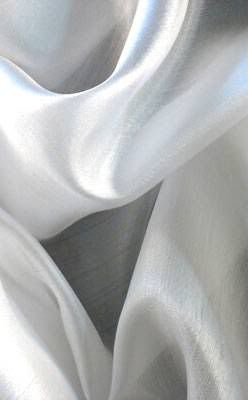
I (guest poster C.M.) use the silk chiffon from the Dharma Trading Company. They have several different weights available. Any of them can be used for skirts: if you want a "fluffy" skirt with lots of layers, the silk gauze works well. For most standard skirts with two layers I use the medium weight chiffon (10 mm). If you want a non-see-through single layer skirt, the double chiffon is best. They also offer this fabric in black because it is very difficult to dye fabrics a true black color. Black is the only color that I would buy ready-made.

The great thing about dyeing silk is that it is very easy to dye on the stovetop (far easier than tie-dyeing). There are several products available for this. I would steer clear of RIT, Dylon, or any other dye available in a craft store. These are general-purpose dyes that do not react with the fibers to form a permanent bond. The colors are not bright and will fade/run over time. My favorite product is the Jacquard acid dye (you can get this from Dharma, or you can go to the manufacturer’s Website to see if any nearby stores stock it). This dye does a great job of giving results that are vibrant, even, and (very) permanent. It is very safe to use as the only other chemical you need is white vinegar. It is very concentrated and a small jar will go a long way.

I have been following the directions posted on the Dharma Website and I have yet to have any problems. When you receive the dye, there will be a swatch on the jar that indicates the color that the fabric will come out if it is fully saturated with dye. It cannot get any brighter/darker than that. The directions tell you how much dye is needed to fully saturate a pound of fiber. In order to determine how much dye you need, you should weigh your fabric (I have an inexpensive gram scale) and calculate how much dye you need from that. If you use more dye than this, some of it will not react with the fabric and will end up getting poured down the drain (these dyes are not all that hazardous, but it is best to be safe). If you want a lighter shade, you can cut the calculated amount of dye by a factor of 2, 4, etc. To get pastels, I cut it by a factor of 10. As long as you don't exceed the saturation point, there should be little to no color left in the dye bath once the simmering is complete.

I don't cut out the pieces of the skirt before dyeing because the edges of the fabric tend to come out a little darker. Once the process is over, you can rinse the fabric in a special detergent called synthrapol in order to remove any unreacted pigment (there is not a lot of excess runoff with this product, but it will soften the fabric). Once it is done, I hang it to dry. It is best to not put this fabric in the dryer because it will shrink and gain a crinkly texture. Once it's dry, it is good to sew. Just remember to cut the skirt a little bit bigger because it does not stretch.

The most nerve-wracking part about this process is getting the dyed fabric to match the Lycra. The best way to do this is to compare a swatch of your Lycra to the different colored dyes available and select closest color match. Some people are advanced enough that they can successfully mix colors; however I feel that the manufacturer offers enough colors (and most skaters select more or less "standard" colors for their dresses anyway). No matter how hard you try, you will not get an exact color match, but nobody is going to notice as long as it’s close. If you are anal about it, you can dye small swatches and take notes about how much dye you use. I just estimate using the swatch on the jar and I always get "in the ballpark" results.

When I first tried this, I had my doubts. However, after my first attempt, I was shocked at how nicely the fabric dyed. If you follow the directions and keep good notes, you cannot fail at this. Dharma as well as the manufacturer have great product support and are happy to answer your questions if you call them. It seems scary, but it is not that hard.

I have read that some designers also dye their own Lycra with this product (i.e. Sasha Cohen's seamstress). However, the same dye recipe will not yield the same color in the Lycra and the silk. This means that you have to use two different recipes to get the same color (not fun to figure out).

The dyeing technique that I described is only useful for solid color dyeing. I only use it when I need to match the silk to a colored lycra bodice. For example, if I were to make a royal blue dress, I would buy the blue lycra and I would dye the white silk to match the lycra as best as I could. I have heard that some people use tub dyeing to achieve an ombre effect, but I have never tried it, so I can't give you any advice on that. When it comes to doing an ombre effect, I use an airbrush with a special paint called dye-na-flo. This is a special paint that can be used with an airbrush on pretty much any fabric you like (not just silk). Just remember to follow the directions.

The link to the acid dyes (and their instructions) can be found here. You might notice that Sasha Cohen's seamstress is featured on this page for using this product (if it's good enough for her, it's good enough for me!).

Dharma offers silk chiffon in a few weights and any of them could be used depending on what type of skirt you like. This fabric is semi-sheer in most cases, so you will usually need to do multiple layers in order to avoid the see-through skirt. I almost always use the medium weight 10 mm. For this, you need to make a double-layer skirt.

If you want to make a single-layer skirt, use the double chiffon. It all depends on what look you are going for. I think having a see-thru skirt defeats the purpose of having a skirt, so I always double up or go with the thicker material. Be warned that the commercial patterns (such as Kwik-Sew) are designed to make skirts with stretch material, so you will need to cut the skirt a little bit bigger. Pin it to the bodice and have the skater try it on so you can make adjustments to the fullness.

I learned all of this from buying the products and trying them out for myself, so you might find something that works better for you. Unfortunately, a lot of dressmakers are very secretive about how they do things (especially when it comes to airbrushing), making trial and error the only way to learn. That being said, if you are interested in improving you need to be willing to be brave and try out things that have no promise of working. If you think things through before you do them, they usually work. It is also helpful if you have a skating friend who gets their dresses professionally made (and that you like the look of). If you ask them (nicely) to bring it with them to the rink, you can take a good look at them in inside and out to see how they are constructed/beaded etc. My sister (the skater in my family) had a friend who splurged for a Tania Bass dress that she let me take a look at.

Being able to study good examples of handmade dresses takes a lot of mystery out of the (often) mysterious world of making figure skating dresses. I think most skating designers started out as some skater's mom or relative that wanted to save money buy making their own, but ended up really enjoying it.

Thank you, C.M., for your excellent post! You’ve given me the courage to try dyeing silk for a skirt – the flowy effect looks stunning. I’m also asking for an airbrush for my birthday, I can tell you that!

Update: From reader Anonymous: The fabric that has worked very well for me is Glissenette. This is a sheer stretch fabric that doesn't roll at the edges when cut. It is easy to sew with and floats beautifully as the skater moves. It is available in limited colors so there is some matching difficulty. I order it from spandexhouse.com, spandexworld.com and Jone's fabric (more expensive, but bigger selection) There is a sheer nude color that I use over nude spandex for nude looking cut-out backs that still provide some warmth.

Update: From post author C.M.: Although this fabric does not contain any elastic fibers (making it a not suitable for bodice material), the fabric does have a little bit of stretch to it, which makes it a little more resilient. However, you still need to cut it slightly bigger and "gather" it around the bodice so the skater can still pull it on and off.

Update: From reader Anonymous: I airbrush with paint as dying on polyester is too much chemical manipulation for my liking, although I could do it if I was dedicated enough. [...] The secrets are in the products, dye vs paint. I've had great success with Jacquard products but they can be expensive.

Do you know more than Ice Mom? Great! E-mail me with your guest post! icemom.diane@gmail.com

Monday, January 25, 2010

Figure Skating Ice Time: It Doesn’t Happen without the Grades

Ice Girl’s not going to like this post, but she never reads my blog anyway. It’s nothing she hasn’t heard before, so if you tell her, she’ll just roll her eyes. She’s a teen. That’s what teens do.

Congratulations to Rachael Flatt and Mirai Nagasu. They earned first and second place at the U.S. Figure Skating Championships and are the only two women the U.S. will send to the 2010 Olympics in Ladies’ Singles Figure Skating. That’s just two spots out of all the many fabulous figure skaters in the U.S.

Think about it. What if we were to take American Idol seriously and listen to only the top two female winners on the radio? That’s it. Just two. Oh, and three guys. So, that’s five. And five duets. So that's...15.

Our libraries would look very different if we selected just five solo writers to pen novels. Imagine movies and t.v. if we limited the number of actors to five. Well, we could include ten more for the pairs and ice dancers, so let’s increase the dramatic cast to 15. Still, many more fine actors would be waiting tables and pouring drinks.

The town where I live is known for high school football. Our football coach runs a football machine and cranks out state trophies like they’re widgets. Still, this is the first year that one of his kids has earned a spot on our university’s football team. I tell you, that kid owns our town. I doubt that he’ll make it to the NFL, but if he does, he’ll be one of 1,696 players. Not two, but hundreds of players.

So to all you ice moms out there who dream of Olympic Gold for your son or daughter, I say: keep the dream alive, but don’t forget about Plan B.

I tell Ice Girl: Shoot for the moon. If you miss, you’ll land among the stars. (I know. Cheesy. But, she’s taken it to heart and written it on all of her folders.)

Lofty goals and expectations are what create drive. That’s good.

However, if your ice kid isn’t quite good enough to make the Olympic team, you have to make sure that Plan B works. Plan B isn’t just good grades. It’s a good definition of self, too.

Ice Girl’s semester ended last Friday. Today is a day off, but she’s at home finishing up some homework. Ice Girl’s looking to raise one of her grades from a C to a B, our minimum standard for ice time.

It kills me to cancel ice, especially if I’ve already contracted and paid for it, but I tell you: grades are more important than ice time. Yeah, figure skating gives Ice Girl pride in her achievements, goals, drive, and confidence. She’s very fit, too. But, let’s face it: she’s gotta have those grades. I don’t care how much she hates the teacher, the subject, or the class. I don’t care about the tears, the protests, and the drama. Kiddo, you get a B on that report card or you lose that ice.

The second part of Plan B is: what if you don’t land on the moon? What if you have to settle for the stars? How will you define yourself off the ice? Ice Girl is in chorus and is working on a duet for a competition. She’s a mediocre gymnast, but she takes gymnastics at the high school during the summer. She takes ballet to improve her figure skating, and, after over a year and a half of dragging her feet into class, she’s discovered she likes it. Ice Girl is a funny kid, not the class cut-up, but his girlfriend. (I know. Ice Girl has a boyfriend. He seems like a nice kid.) She loves art and resists foreign language. She hates to read, but loves to write. She has a terrible Facebook and texting addiction. I try to teach her how to sew. She tolerates my efforts.

Look. I’m a realist. Ice Girl will probably go to Regionals, but it’s unlikely that she’ll go beyond that. She’ll probably coach after high school and she’ll probably be good at it. Figure skating will always be a big part of Ice Girl’s life, which is great. But, ice won’t be the only thing in her life, which is even better. She’ll have those grades (or else), go to college, have a career, and move out of the house (we hope). She’ll define herself in many ways, but if her figure skating doesn’t go beyond Regionals, she’ll still have many, many stars to choose from.

Again, congratulations to the fabulous figure skaters, both male and female, who skated at U.S. Nationals. Getting there is a testament to your hard work. Congratulations, too, to the 15 guys and gals who will be representing us at the Olympics. Your achievement represents many hours of work, sacrifice, and determination. It was a joy to watch all of you and I’m glad that you give all the current skaters a target to shoot for. May you succeed at figure skating and beyond.

Update: From reader Red Shamrock: Here, here! Does not matter WHAT your moon is (music, dance, math) there must be a Plan B. Life has a pesky habit of making the moon move.

Update: From reader Jozet at Halushki: Music, language, art, athletics, science, academics, outdoorsmanship...all these and more are ways our children relate to the world and learn to understand people around them as well as themselves. Of course, much might be learned through rigorous attention to one facet of who they are or could be.

However, a smashed-up knee a few months ago clarified for us very quickly what the risks are of identifying oneself mainly via one definition.

My skater is back on the ice, and she's going at it with gusto and determination and discipline. However, I am also making sure that my kids learn about and define themselves and their abilities and the world by exploring many road. Firing many rockets, as it were.

Update: From reader PrettyBowtie: I spend a bit of my time with ex-Olympic skaters, and the thing they always say is that they wish they'd finished school/gone to uni/done something in case it didn't work out. Lucky for them it did, but I can imagine how hard it would be if skating was your whole world.

Update: From reader SzuSzu: So if you believe there needs to be a healthy dose of achievement in childhood how do you find the balance? In our home the balance is arrived at by setting simple rules and priorities. Academics are king - school comes first. Commitments are honored. Free time, piano, sports, socializing, TV are all juggled through the week. Not everyday is the balance perfect, and we have plenty of conflicts and occasional late night homework sessions. But this is a lesson too. Hopefully we provide a good mix in the long run, teach some time management skills & self discipline.

Update: Very smart update from reader, Advisory Board member, coach, and blogger Xan of Xanboni!: I agree that academics must come first, but I'm going to add a "usually." My daughter went to Jr Nationals as a junior in high school, and her school would not let her miss more than 2 days. So she had to fly in (from sea level to the mountains with no time to acclimate), do a late night practice session, an early morning practice session and the competition, all in a 36 hour period. She missed everything about competing except the stress. She did poorly at the competition and never really forgave the school for not understanding how important skating was to her. It isn't balance if it doesn't work in both directions.

Update: From reader Season: I completely agree with your blog comments on this matter.  I have always told my daughter that she should skate for herself and to make her happy and whenever this sport no longer makes her happy she should do something different. If she wanted to persue going to the Olympics I would support her but if she just wanted to skate for the pure fun of skating that is okay with me. [...]I also agree that every athelete should have a Plan B because you never know if injury, financial problems or burnout are going to take you out of the sport you enjoy. response by: Season

Update: Great post from blogger Mr. Sports Blog about Rachael Flatt and her determination to succeed on the ice and in the classroom.

Update: From reader Jozet at Halushki: Xan, This drives me nuts. If a kid is doing well in school and is involved in an outside activity in which they are disciplined and progressing - and that discipline will only carry over to other areas of their life - then why the heck can't they get off some school time for a national level competition. Because we all know that if it were football players or even band, those kids get off school time to travel, etc. 

Update: From reader Anonymous: My daughter adores skating but she also loves alot of other things like art,lacrosse,cheering,and dance. I really believe that kids should have a variety of interests to keep them happy and balanced,and of course academics should come first.

Do you have a question for Ice Mom or the Advisory Board? Better yet, are you terrific at some skate mom thing and you want to share your expertise with the rest of us? Great! E-mail me at icemom.diane@gmail.com 

Monday, January 18, 2010

Ice Mom’s Sewing Guide: All about Fabrics

This post is part of Ice Mom's Sewing Guide.
Other posts in this series: All about Patterns, All about Fabrics, How to Dye Silk for Fabric Skating Skirts, Altering Your Growing Skater's Figure Skating Dress, Laying out the Pattern.

I really, really love fabrics. I can spend hours in the fabric store just browsing the aisles and touching all the pretty choices.

The problem is that national fabric chains stock very few fabrics that are suitable for sewing figure skating dresses or other ice wear. Browsing the dance/swimwear section at JoAnn Fabrics takes maybe three minutes. Very unsatisfying.

In this ginormous post, you’ll find basic fabric words, what to look for in figure skating fabric, buying fabric and notions, prewashing fabric, non-stretch fabric, and online vendors who sell two-way stretch fabric. I encourage sewers to contribute their methods to this post in the comments. If you have a great figure skating fabric or stretchy trim source, let us know that, too!

Basic Fabric Terms
  • Bias: The bias is the line that runs at a 45-degree angle from one selvage edge to the other. It’s the weakest part of the fabric and also the stretchiest. Sometimes you’ll find bias-cut skirts in ready-to-wear clothing, especially formal wear, because it has a pretty drape. I hate the bias, though, because it’s shifty and can warp once you’ve sewn a hem. If you ever work with a bias-cut skirt, allow the skirt/dress to hang for a couple of days and then even out the hem. That’ll save you some curse words.

    I’ve never had to use any bias-cut fabric on a figure skating dress, but you might encounter a call for bias-cut strips. You can find these near the zippers in your fabric store, or, if you’re ambitious, you can make them yourself. I’ve only been ambitious once. Bias strips are stretchy and wrap well around curvy seams. They’re often used in tailored clothing to enclose a seam. Want to see some? Look at the waistband of most men’s trousers. You’ll find bias tape at the bottom. Looks like a lot of work to me.
  • Bolts: At the fabric store, you’ll find yards of fabric wrapped around a flat cardboard core. That’s called a bolt of fabric. If I buy a lot of one kind of fabric, I often ask the cutter for an empty bolt. The cutter will wrap my fabric around a bolt, which makes managing and storing my fabric easier. The bolt ends contain useful information like fabric width, fabric content, and laundering instructions. If you can’t figure out what the laundering symbols mean, ask the fabric store’s cutter. Sometimes fabric stores offer a flyer that explains the laundering symbols. I always misplace that flyer.
  • Cut edge: The cut edge of the fabric is the second weakest part of the fabric. The cut edge runs perpendicular to the selvage edges and is the part where the person at the fabric store has cut your fabric from the rest of the bolt. If you tug the fabric from selvage edge to selvage edge, you’ll find that the cut edge, even of woven fabric, is stretchy.
  • Drape: This is how the fabric moves. Canvas has very little drape to it: it’s stiff. You’d use canvas for sturdy shoes, not a flowy dress, right? Spandex has a nice drape that lends itself well to a skirt.
  • Elastic: Elastic is generally the white, stretchy braided stuff that sewers put around the panty legs, neck lines, and arm openings of a figure skating dress. Elastic holds the fabric close to the skater’s body for a good fit. I buy 3/8-inch elastic (for leg, neck, and arm openings) and 1-inch elastic (for waistbands) in packages when it goes on sale. You can also purchase elastic by the yard and have it cut at the fabric counter.

    Clear plastic elastic is a pain in the butt. It’s difficult to sew because thread often tears through the elastic. If you choose clear plastic elastic, use a heating tool to melt the two layers of the plastic together. Clear elastic is great for bra straps and hat straps, but it’s too much trouble for anything else.
  • Grainline: All fabrics have a grain, or a part of the fabric that’s more stable and not as stretchy as the cut edge or the bias. Take any fabric – woven or knit – in your hands and pull outward in one direction. Now grab the fabric perpendicular to the first direction and pull. You’ll feel that the fabric, even woven fabric, stretches more one way than the other. The grain line runs parallel to the selvage edge and is important when you lay out pattern pieces.
  • Nap: Nap is the optical direction of the fabric or the direction of the printed pattern. This is an important concept especially when you deal with velvets or printed spandex. Velvet looks either lighter or darker, depending upon the direction you view the fabric. If you have a print, even what looks like a random print, lay out your pattern pieces in the same direction, tops all pointing the same way.
  • Notions: Everything that isn’t fabric, a pattern, a machine, or furniture is a notion. Elastic, trim, zippers, and thread are all notions.
  • Right/wrong side: You’d think this would be obvious, but sometimes it isn’t. In cases where it’s difficult to see a difference between a right side and a wrong side of the fabric, check out the selvage edge’s finish. Its finish is neater on the right side of the fabric. However, sometimes even that’s difficult to tell. Sometimes a piece of stretchy fabric’s edges will curl more to one side than another. I usually choose the side with the curl. The main thing is to be consistent. You might not think that consistency matters because you can’t tell which is the right/wrong side while you’re constructing the outfit, but often you can see the difference when your skater wears the figure skating dress. I put a chalk mark on the right sides of fabric pieces so I can be consistent.
  • Selvage edge: The selvage edges are the factory-made straight edges of the fabric and are the fabric’s strongest part. If you tug the fabric from cut edge to cut edge, you’ll find that the stretchiness is not as great as along the cut edge, so it holds its shape better.

    Selvages often look different from the rest of the fabric – they’re about 1/4 – to 1/2-inch wide and might have a tighter knit or different color. You’ll find the selvage edges at the top and bottom of a bolt, perpendicular to the cut edge. Selvage edges are useful for finding the right side of a piece of fabric as well as for aligning pattern pieces. The right side of the fabric will often have a selvage edge that looks more finished on one side than the other. When you layout patterns, you’ll use the selvage edge to help you align the pattern piece to a grain line.
  • Stretch: Stretch fabric literally stretches when you pull on it, but retains its shape when you release it. That’s why it’s well suited for figure skating dresses and ice wear as well as swimwear and other athletic clothing. Athletes move easily in stretch fabric.
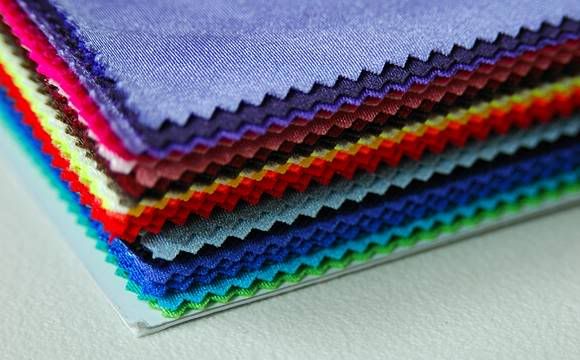
  • Swatch: A small bit of fabric. Don’t be afraid to ask fabric stores or online fabric retailers to give you a swatch. At fabric stores and some online retailers, it’s free. Other online retailers will sell you a swatch book. It’s very useful to have a few swatches for matching up colors, especially if you’re ordering online.
  • Thread: we call the string thread, not string. No idea why. I use all-purpose thread, not cotton quilter’s thread, buttonhole twist, or embroidery thread. When you look at the thread display at the fabric store, you’ll find all four types of thread. Be sure to buy all-purpose thread.
  • Trim: Trim is the ribbon or sequin chain that sewers use to embellish a figure skating dress or ice wear. Make sure whatever you buy is stretchy. I don’t care how pretty it is, if it doesn’t stretch, put it back on the shelf.
  • Width: Fabric comes in 45- or 60-inch widths. In other words, if I buy a yard of 45-inch fabric, the piece will measure 36 inches by 45 inches. It’s a good idea to look at the bolt end to find out how wide your fabric is.
  • Yardage: In the U.S., fabric is sold by the yard and portions thereof in eighths. In other words, you’ll hear people asking for 1/2 yard at the fabric store’s cutting table, not 18 inches.
Figure Skating Fabric: What to Look for

Two-way stretch. For most purposes, the only fabric you’ll want for figure skating dresses is two-way stretch. You can tell if a fabric has a two-way stretch if you pull it both parallel to the cut edge and parallel to the selvage edge. If both directions are stretchy, you’ve got two-way stretch.

Keep in mind that most of what you use on a figure skating outfit should be two-way stretch, even the trim. There are exceptions, which I’ll get to in Non-stretch Fabrics below.

The names of the different kinds of stretch fabrics are confusing, even for me. If anyone knows what ITY is,  please leave it in the comments. I’ve bought it before and it looks like plain ol’ two-way stretch to me. *Update: Thank you reader pdanek! See her explanation way below in the updates.
  • Athletic mesh – this is two-way stretch fabric, but it’s not solid, it’s a mesh. You’ll often see sewers use this for details on a dress or over/under skirts. I’ve used flesh-colored athletic mesh near the neckline of dresses to cover the skater, but hide the fact that fabric is on the skin. Look closely at many top-level skaters’ outfits in skating magazines. You’ll find lots of flesh-colored athletic mesh around the neckline. I’ve also used colored athletic mesh, especially for dress sleeves. Athletic mesh is difficult to find in the fabric store chains.
  • Cotton spandex – This cotton/spandex blend is a great fabric for practice pants, tops, and shorts. It’s not great for skirts or dresses.
  • Glissenette – Very fine, almost sheer spandex, often with a glimmer finish. You can make a dress out of it, but be sure to line the entire leotard or you’ll send your skater out on the ice in a cold, see-through dress.
  • Knit – Most two-way stretch fabric is knit fabric. It’s not bulky like a sweater, though, it’s a fine knit that you’ll find in all sorts of garments like T-shirts and underwear. Knits are, by nature, stretchy.
  • Lycra/spandex – What’s the difference? None. Lycra is DuPont’s brand name of spandex fabric. Spandex is the name for the stretchy, elastic fibers. You can find pure spandex fabric or spandex combined with other fibers (cotton, nylon, rayon). Popular spandex applications include swim suits and comfy, stretchy denim jeans.
  • Nylon spandex – A fabric blend made from both nylon and spandex. I’ve found shiny, moleskin, and other forms of this fabric. It’s a good choice for ice wear.
  • Panné - This is a one-way stretch fabric that I’ve used for practice skirts. It’s cheap (maybe $3/yard), plentiful (a rainbow of colors at the national fabric store chains), pretty (kind of a crushed velvet texture), and washes well. It’s stretchy along the cut edge, so line up your pattern pieces so the grain line is parallel to the selvage edge. Like velvet, panné has a nap. Be sure to layout all pattern pieces in the same direction (all top edges should be pointing the same way). You can also use this without fear for figure skating skirts.
  • Rayon spandex – Another fabric blend with spandex. Suitable for ice wear, but be sure to check the laundering instructions on the bolt end.
  • Slinky – This two-way stretch fabric is often crinkled and has a very pretty drape to it. I wouldn’t sew a figure skating dress leotard with slinky fabric; I’d use it for the skirts where you want a lot of swing.
  • Spandex/Lycrasee Lycra/spandex above
  • Stretch lace – This is the only kind of lace you’ll want to use to make ice wear. Some of it looks like Grandma’s tablecloth, but you can also find a wide variety of patterns and colors, especially online. I’ve never found the stuff at national fabric chains. Stretch lace is great for creating texture and color variations in ice wear. Many people cover bodice fabric with stretch lace.
  • Stretch vinyl – Looking for the fake leather look? Here you go. Ice Girl’s pop can dress was made of silver stretch vinyl. It sews well and is kind of funky. I used the leftover pieces to make panties for a practice skirt – every time she spins or jumps, she flashes a bit of silver – very cool.
  • Stretch velvet – I really love the rich look of stretch velvet and I was surprised that the pieces I bought machine washed and dried with no problem. I’d still check the bolt ends to make sure that you can wash them this way. If you’re a new sewer, stretch velvet’s going to give you a problem. The velvety fibers will shift under your machine’s presser foot. I recommend a walking foot, if you have one. Stretch velvet has a nap to the fibers, so be sure to cut out all pattern pieces in the same direction. In other words, the tops of all the pieces should point toward the same cut edge of your fabric. I know a new sewer who created a dress out of stretch velvet successfully, so don’t let its shiftiness deter you. Just be aware that you might have to stop sewing every three to four inches to check or adjust your fabric.
  • Tricot Tricot in French means knit. This fabric is usually smooth and used for lining outfits. I use a flesh-colored tricot to line all of Ice Girl’s figure skating dresses and to make figure skating undergarments. When I buy flesh-colored tricot, I buy it in 5- to 10-yard amounts and just keep it on hand.
  • Two-way stretch: Another word for spandex fabric. See Lycra/spandex above.
Buying Fabric and Notions

Double-check the back of your pattern to verify the yards that you’ll need. Patterns will often list yardage for 45-inch wide fabric and 60-inch wide fabric, so take a look at the bolt end for that information. I usually add 1/8 yard to my cut yardage so I’m sure I’ll have enough fabric. Sometimes I add a half yard to squeeze in a practice skirt out of the material.

If you’re a first-time sewer, here’s what my friend and advisory board member C.L. says: “Buy enough fabric to sew another complete dress. It takes the pressure off! For me that was just an extra $10, but well worth the piece of mind.”

Watch the person at the cutting counter as she rolls out, measures, and cuts your fabric. Most cutters do a great job, but people make mistakes. Watch for stained fabric and/or fabric with cuts or flaws. I reject that fabric, but often the cutter will offer it to you at a discount. Make sure that she’s cutting both layers of the fabric evenly and that she’s not cutting on an angle. If you’re worried about something, mention it the cutter while you’re at the cutting counter. If you notice a problem with the fabric once you’re home, take your receipt and the fabric back to the store.

When you’re buying the fabric, you should also buy your all-purpose thread. Don’t buy all-cotton quilter’s thread, expensive and shiny embroidery thread, or way-too-thick buttonhole twist. Walk your fabric cut or swatch over to the thread display and choose a spool that looks very close to your fabric color. Pull a bit of thread off the spool and lay it on your fabric. Does it disappear? Is it really, really close? Great. That’s the one. A small spool of thread should be enough for most figure skating dresses.

While you’re at the store, trot over to the ribbon and trim shelves with your fabric. Can you find stretchy sequins or ribbon that will look nice on the fabric? This is a good time to pick it up. Make sure the trim is stretchy. If it’s not stretchy, your skater will have a very hard time putting on the figure skating dress and the stitching might rip out.

Prewashing Fabric

Be sure to ask the cutter or online seller how to wash and dry the fabric before you attempt to launder it. If you have skipped this step, wash and dry a swatch to make sure your method doesn’t ruin the fabric. Whatever laundry method you choose, make sure you prewash with the one you plan to use on the finished figure skating dress or ice wear. It’s terrible to wash a finished garment just to ruin it in the spin cycle.

You’re not prewashing the spandex fabric because of shrinkage issues. Spandex doesn't shrink. Your’re prewashing to remove excess fabric dye, which can bleed on the figure skating dress’s other fabrics as well as your regular clothes. Prewash each piece of fabric separately in its own load.

For finished figure skating dresses, I recommend the vodka method for in-between cleanings, both for embellished and dry-clean only figure skating dresses. Test it in a small spot on the dress, like the upper back panty, where no one will see. Let it dry and see if the vodka damages the dress. If not, spritz away. Remember: no orange juice. (This method is fabulous for anything you send to the dry cleaner: suit coats, fancy trousers, sweaters, etc.)

Dry-clean-only fabric doesn’t need to be dry cleaned before you sew it. Just remember that you can’t run it through your washer when the time to clean the figure skating dress comes. Between cleanings, test a scrap of fabric with the vodka method to see if you can delay a trip to your dry cleaner a bit longer.

Non-stretch Fabric

Woven fabric is non-stretch fabric and your local fabric store will have many tempting colors and patterns. You can use non-stretch fabric, but only for skirts and men’s shirts. Be sure to look at the fabric’s drape before you use it. You don’t want something stiff that won’t flow with your skater’s movements. I’d choose a rayon or a sheer tulle.

If you’ve fallen in love with a non-stretch trim, you can use it on the non-stretch fabric. You can buy a non-stretch lace medallion to use as an embellishment, but make sure to place the medallion on the dress while your skater is wearing it. Gently pin it and sew.

Online Spandex Vendors

Online spandex vendors have many more fabric choices than your local fabric store. Just search for spandex or Lycra fabric online to find thousands of options. I have experience with just two. If you have a favorite online spandex vendor, please help me add to this list with your experiences, both good and bad! Write about them in the comments.
  • Performancewearfabrics.com This source used to be YourDesigns.com or the Lycra Lady. I order most of my fabrics from this vendor, but most of the fabric isn’t available for viewing online. I know the vendor’s working on it, though. What I like is that she has an affordable sample club. Pay the small fee ($25 when I signed up) and receive hundreds of swatches. I like having the samples because it’s easier to show people the fabric, easier to match colors, and I like to feel the fabric before I buy it. Sample club members receive discounts on ordering fabric and occasional e-mails about sales. Her standard two-day shipping is not free and the fabric is more expensive than other vendors. However, the selection and service are outstanding. Once, I bought a piece of fabric that looked like some man had rubbed his beard all over it. In other words, it was fuzzy in spots, not smooth. The owner immediately refunded my money. Another time I didn’t receive my order in two days. She sent it and refunded my shipping costs. I've also called her many, many times to ask about fabrics that might work well together or her opinion about using a certain fabric for a bodice, skirt, or sleeve. She's very, very helpful. There is no minimum purchase using this vendor and you don't have to purchase your fabric in one-yard increments.
  • Spandexworld.com I really like this source’s printed spandex and the prices are great. All of their fabrics are available online for viewing, but you need to realize that computer monitors don’t always display colors accurately. Shipping isn’t free, but it’s first-class and much cheaper than two-day shipping. I was disappointed in some of the printed spandex I’d received. On the wrong side of the fabric was some residual dye from the front. Since it didn’t leak through, I didn’t return it to the company. I have no experience with their return policy. If you ask for swatches, they’ll send them to you for free, but the wait time is a good two weeks unless you pay extra. However, they were really good about sending me samples that matched a swatch online. I picked out a swirly orange fabric and wanted a solid that would coordinate with it. They sent 10 samples from which to choose, which was very helpful. You must order at least two yards of fabric, in one-yard increments.
Update: I have three recommendations for SpandexHouse.com. Here's what the readers have to say:

From reader Anonymous: I've had good luck with Spandex House, and the milliskin has great selection of colors and matching sheers.You can order fabric swatches for free.

From reader c.m.: I agree. Spandex House is great!

From reader pdanek: I've been using SpandexWorld for my fabrics. Love the swatches. You can call and ask for all the pink fabrics and they will send them. It does take some planning ahead since they are a bit slow but I'm happy with their service so far.

Update: Reader c.m. offers informtation about non-stretch fabric and an online vendor:

For skirts, a lot of people use stretch mesh and glissenette. However, no other type of fabric can replicate the look and flow of silk chiffon. I get it from http://www.dharmatrading.com/ in white (medium weight) and dye it to match the lycra. From this source, it is quite cheap (2-5 dollars per yard). Colored silk is very expensive, so I don't bother with it. I find that this fabric gives the dress an expensive and professional look and is also great for airbrushing.

Update: From reader Bonnie: Just thought I would give you another source to add for spandex, etc. http://www.maryjos.com/ is online and a fantastic, huge place to shop filled with fabric and trims of all kinds in Gastonia NC. I am new to ice skating dresses but found a rainbow of colors and all types of stretch online at Mary Jo's. They are great to work with and will send swatches.

Update: An answer to my ITY question! Thank you, reader pdanek!
After a little internet hunting I think I found the answer to your question about ITY spandex. I was curious myself. "ITY Jersey Interlock twist jersey is a medium weight jersey knit that is available in a wide variety of prints. This fabric is soft, beautiful, and comfortable to wear! It’s perfect for travel, as well. copied directly from the EmmaOneSock site"


I have only seen "ITY" associated with prints which I find odd since the abbreviation seems to apply only to the weave.

That’s everything I know about fabric. Did I miss something? Do you have an experience to share? Do you love clear plastic elastic and know how to deal with the evil stuff? Have you any idea what ITY spandex is? Know of a good spandex vendor? Add to the comments!

Do you have a question for Ice Mom? E-mail me at icemom.diane@gmail.com.

Wednesday, January 13, 2010

How-to: Cope with Two (or More) Figure Skaters in the Family

Question from a reader:

I'm in quite a predicament. I have two [figure] skaters, one 10 years old and one 8 years old, that are now both at the Pre-Preliminary competition level. I'm not sure how to handle this because I'm not crazy about my girls competing against each other in a competition, but I also don't want to hold one back. What do you think?

I put this out to my advisory board and here's what two members had to say:

C.L.: Oh I love adding my two cents. This is what I would do. I would put one in restricted or test track pre-pre and the other in well balanced pre-pre. Test track being the easier one (this one for the older skater). Of course, if the parent can convince them that they are only really competing against themselves then it shouldn't matter how they place. Perhaps not even checking the judges’ sheets after would be a good policy...if they skate better than in practice or at the best they can skate haven't they really come in first anyway? :)

Pairs Mom: I'm not sure I'm "qualified" to answer this question but I will try and give some advice...

Most mid-size competitions will have two or more groups of Pre-Preliminary skaters that are grouped together by age and normally this is done by the referee. If the girls take from the same coach or if they do not, have one of the coaches email the referee and ask that they be placed in two different groups for the competition. We normally group skaters together by ages 6 - 9 and 10 - 12 but this can vary slightly due to entries. This avoids the girls having to compete against each other. This way they also get to cheer for each other! Good luck!

Here's my take (caution: long and preachy):

Ice Mom: Kids are more like snowflakes than widgets. Each person is unique. Each person learns and develops at his or her own rate. This is a good thing. Learning something isn’t about the destination: it’s about the journey. It’s about collecting experiences that build up our knowledge.

That sounds pretty flowery, so let me make it more concrete. According to my favorite cognitive scientist, Daniel Willingham at the University of Virginia, the brain doesn’t like to think. This is true. Our brains love to work on experience. Given the choice between thinking of a new solution and relying on experience, our brain will almost always choose experience.

What does this mean for figure skaters? Each skater must build up his or her own experiences. Remember me ranting about that stupid Axel? Well, the figure skater who lands the stupid Axel in one month might not have built up the body of experience that the figure skater who lands it in a year has built up. Or, possibly, the one-month Axel kid has built up many years of figure skating experience and can land the jump more easily because of that experience. Building up that experience allows a figure skater to know when the jump doesn’t feel right and how to save it. Building up that experience teaches a figure skater how to fall so it doesn’t hurt as much. Building up that experience makes it easier to learn the next jump.

Willingham says our brains aren’t like file cabinets with a limited amount of storage. Instead, our brains are like magnets. The more experience and knowledge you put on the brain, the more magnetized the brain becomes. The more the brain holds, the more information and experience it gathers. So that year-long stupid Axel process isn’t a waste of time. It’s an experience-gathering period of time. None of the falls, set backs, and two-foot landings are a waste: they’re building up that knowledge base.

So comparing one 10-year-old figure skater to another 10-year-old figure skater is a tough thing to do, because each one collects different experiences. It’s even tough to compare the 10-year-olds if they are twins in your own family. I know twins who look so similar that I’m grateful when they wear jackets with their names on them. One twin is a lefty, the other a righty. One usually places a bit higher at competitions than the other, but they’re pretty evenly matched. How does the mom cope? She tries very hard to enter them in bigger competitions where the twins might not compete against one another. She includes a note in the registration envelope to ask that the girls not be in the same group. She also tries to teach them good sportsmanship and to be happy with their individual performance.

Does it work? Well, pretty much. I won’t lie to you: one girl is usually pretty disappointed and tries to put on a happy face for her sister. That builds up the knowledge bank, too.

I know another family where the skaters are two years apart. The younger one just landed her double Axel. The older one is still working on it, but she’s genuinely happy for her sister. Why? I think she’s realized that there isn’t a limited supply of double Axels. Sure, not everyone gets one, but for skaters who put in the time, have built up experience, and benefit from good coaching, the double Axel is something figure skaters can earn. One sister’s double Axel achievement doesn’t prevent the other one from earning one, too.

Note: This all sounds great on paper, but you all know that I still hate that stupid Axel and all of the frustrations it brought. Yeah, yeah. Build the knowledge base and all that. I get it. I still hate that stupid jump, though.

Alright. I’m done preaching.

Update: From reader JustPat: You can influence how they handle winning and losing, especially to each other. Your reactions to winning and losing will influence their perspective of how important it is to be a "winner."

Everyone who has been involved in skating for some time will tell you that it's important for the skater understand that if they have skated their program to the best of their ability, that's what should count in the skater's mind. If they are rewarded by the judges, it's a bonus.

I'm sure that it's difficult to lose to a "little sister." Perhaps you could also emphasize the things that the older child does better/ is allowed to do that the younger one can't.

In the meantime, make a note on the registration forms when you enter them in competitions. (Or as mentioned earlier, have the coach contact the ref.) I used to organize our club's local competitions and with the referee's permission, we made every effort to accomodate those requests. In some cases we couldn't split the groups, so the parent chose to put the siblings in different events- one would do Freeskate, the other Moves, or Showcase for example.

Update: From reader Xan of Xanboni!: First of all, if you think you're kids aren't competing already, you're delusional, but frankly my experience coaching MOST sibs is that they support each other more than they compete with each other. [...]if they learn not just to handle, but to take joy in each other's successes, well, that's one of those life lessons that makes figure skating such a great thing for kids to do.

Update: From reader Mary Beth Niedermier: My advice is to tell your child to do their best. After competitions, one of the first questions I always ask them is if they thought they did their best. There are so many variables to competition, that I stress that they should be happy doing their best and be proud of the effort they put into it.

So, parents. How do you cope with two (or more) figure skaters in the same family? Please add your experiences in the comments.

Reference:
Willingham, Daniel. (2009) Why Don't Students Like School?: A Cognitive Scientist Answers Questions About How the Mind Works and What It Means for the Classroom. Jossey-Bass: San Francisco. http://www.danielwillingham.com/

Do you have a question for Ice Mom? Send it to me at icemom.diane@gmail.com.
RCZXZD2EKAPT

Monday, January 4, 2010

Ice Mom’s Sewing Guide: All about Patterns

Note from Ice Mom: I’m going to write a series of posts about sewing. I figure that I write a lot about sewing and that many of you would like to try it, but don’t know where to begin. So, I’ll be posting about how the process works. As I build this fountain of knowledge, I’ll put all posts under the Sewing Guide category. Of course, if you sew, please write about your process in the comments!

This post is part of Ice Mom's Sewing Guide.
Other posts in this series: All about Patterns, All about Fabrics, How to Dye Silk for Fabric Skating Skirts, Altering Your Growing Skater's Figure Skating Dress, Laying out the Pattern.

Sewing patterns are a bit more involved than finding a pattern and buying it. Pattern prep begins with measurements and ends with alterations. It can be intimidating, but I think you can handle it.

My advice would be to start small and easy. If you've never sewn anything before, start with a practice skirt. My favorite practice skirt is Jalie #2215. Its waistband is like poetry - very smart, very easy, very neat. You can read my two reviews of this pattern: pants and skirt. Even easier than the skirt is Jalie's shrug pattern #2558. I reviewed the shrug pattern, too.

Measuring. Before you shop for patterns, measure your skater. This is an awkward process because you have to measure in spots that are pretty private. Your skater should be dressed in tight-fitting clothes, preferably a leotard and tights or skate pants and a tank top.

Before you begin, it’s a great idea to have a small spiral notebook or a few file cards handy. Use one page or file card per skater. Write these letters down the side of the card, like a column: B, W, H, Dia., In. Those stand for Bust, Waist, Hip, Diagonal, and Inseam. Across the top you’ll put the measurement dates.

  • Bust. Have your skater lift her arms in the air and wrap a flexible tape measure around the widest point of your skater’s chest. Have your skater put her arms down to her sides and stand up straight. Take the measurement and write it down next to B under today’s date.
  • Waist. This is the natural waist, not where your skater wears her jeans. Find the point where the body cinches in. That’s the waist. Measure it and write it down next to W.
  • Hip. This is the widest part of your skater’s body below the belly button. If you’re measuring across the butt cheeks, that’s just fine.
  • Diagonal. This awkward measurement is something that Jalie requires and it’s a good idea, anyway. The measurement figures out how long your skater’s torso is. With feet apart, start the measuring tape at the skater’s left shoulder. Bring it down to the crotch and back up to the shoulder. It makes a big circle around your skater’s torso. Write this measurement next to Dia.
  • Inseam. You don’t have to take this measurement unless you’re sewing pants. Again, this one’s awkward. Ask your skater to stand with her feet apart. Measure from the crotch to the knobby bone at her ankle. That’s the inseam.
Pattern selection. I look for patterns that are multi-sized for easier fitting, on sturdy paper for easier drafting, and have good instructions. Patterns aren’t cheap. Expect to pay $10 – 20 for each one. That’s another fabulous reason to buy multi-sized patterns: more uses.

I recommend Jalie or Kwik Sew for figure skating patterns, but Specialty Sportswear has very nice designs. Jalie includes 22 sizes in the envelope and prints on sturdy paper. Pattern backs and instructions are downloadable in .pdf form on their site. Kwik Sew is a multi-sized pattern on sturdy paper, too. Its instructions are well done, the diagrams are clear, and novice sewers should have plenty of success. Specialty Sportswear has many nice designs, but only one size in the pattern envelope and the instructions and diagrams are for advanced sewers. I don’t touch them, myself, but I know people who have great success with them. You can read my review of Specialty Sportswear patterns here. All patterns are available online. Kwik Sew and Jalie are available in some fabric stores.

I do not recommend Green Pepper patterns. The one I made didn’t fit at all, which is a huge waste of my time and money.

Consider, too, your skater's body type. I once sewed a dress for a skater who had a generous bust measurement. The dress had a halter top. Very cute, but the girls kept getting loose when the skater moved. I added addtional straps to keep the girls inside the dress and the skater comfortable.

Fitting. When choosing a size, it’s always easiest to work off the bust size measurement than any other measurement. Why? Because reshaping arm holes is a real pain. If you make adjustments to the bust, you’ll mess up the arm hole and maybe make it too tight or too loose. Neither is great and both are hard to fix for a novice sewer.

Your skater might be a size small horizontally, but a size medium vertically. My advice is to trace the pattern for the horizontal size and the vertical size. So for that example, I'd use the small measurement for the horizontal and the medium measurements for the vertical. Match up the intersections at logical points.

If this is your first dress you’ve sewn for the skater or the first time you’ve sewn patterns from a pattern company, you might consider combining the panty and bodice (top) pieces. I have instructions to combine pattern pieces below (Combining two pieces into one piece). The idea is that you’ll have a leotard to work with instead of a top and panties. It’s much easier to baste the leotard back and front together using a long, long machine stitch and have the skater try it on than to try to add fabric to the panty after the dress is sewn together.

Fitting the leotard: Even though this post is about patterns, here’s the explanation about how the leotard fitting method works, but first you'll have to follow the instructions in Combining two pieces into one piece. Baste the leotard together (right sides together) at the shoulder, crotch, and side seams. Don’t do any finishing work and make sure you can pull those stitches out. Have the skater try on the leotard, wrong side out. Use a water-soluble fabric pen to indicate where the leo needs to be taken in or let out. Sew the final leo along your markings, rip out the basting, and ask the skater to try it on, right side out. Gently pin the skirt along the markings you made in the Combining two pieces into one piece instructions below. Does the skirt cover the panties? If not, adjust. When you have the dress at your machine, repin the skirt so the right side of the skirt and the right side of the leo bodice are together. The skirt’s hem will be towards the neckline. Zig zag stitch the skirt to the leo at the skirt’s top edge. The skirt will hang down over the stitching and no one will ever see it.

Pattern tracing. You don’t have to trace your patterns, but it’s a pretty good idea. Many patterns will set you back $10 – 20. The patterns are multi-sized and you might have to make adjustments to make the dress fit. If you’re going to make adjustments anyway, you might as well give in and trace the pattern. It takes me about 30 minutes to trace a pattern and watch half an episode of Dexter. Be sure to iron the pattern flat and have a big, flat surface to work on. Some folks use their floor, but I use my kitchen table, which is a good excuse to clean it off.

I recommend that you purchase pattern tracing paper from a fabric store. You can purchase a yard of this thin stuff for about $1.99. I buy in 10-yard batches and try hard to use a 50% off coupon. Ask the gal at the cutting counter to give you an empty bolt for storing the paper. Pattern tracing paper comes in plain and gridded models. Either works fine, but I use plain. I find all the extra grid lines confusing, but that’s just me. You can also use lightweight sew-in interfacing if the fabric store doesn’t have any tracing paper in stock (do not use iron-in interfacing). Another option is plain ol’ white tissue paper, like you’d use for gift wrapping. Tissue paper is thin, though, so it won’t stand up to heavy use.

Sharpie, ruler, soup cans. I use all three to trace my patterns. I lay down the pattern, cover it with tracing paper, and weight it all down with soup cans. I trace the pattern using a Sharpie and a ruler. Sometimes it’s tough to see which line to follow. Give yourself permission to lift up the tracing paper (try to keep the lines in place) every once in a while. It helps to approach a jumble of similar lines from two different directions to help you find the correct line.

Be sure to transfer the grain line (the arrow and line down the middle of the pattern piece) or the place-on-the-fold line, the letter or number of the piece, the make and style number of the pattern (so you can pick it out from a potential mess of pattern pieces), the size, the skater’s name, and the number of pieces to cut.

I also keep a roll of medical paper tape with me when I copy patterns. Sometimes tracing paper rips or I cut through it. Repairing the pattern with paper tape allows me to iron over the tape without it sticking to my iron plate and shriveling on the pattern. I also use it to reinforce any guides that the pattern might have. Sometimes patterns have circles where a zipper stops or starts or where a sleeve meets the arm hole. I use the paper tape on both sides of the pattern piece, cut out the hole, and then use my chalk or fabric marker to mark over the hole. The paper tape prevents the marking hole from ripping.

Combining two pieces into one piece. This is a very, very useful technique, especially if you’ve never sewn for a particular skater or never used a pattern company’s materials. The idea is that you’ll combine the bodice (top) and panty pieces into one leotard and fit the leo to the skater. Using the leotard method eliminates the headaches associated with adding fabric for length.

Trace the bodice pieces, both front and back. At the bottom of each piece, measure up for the seam allowance and mark the seam line (where you’ll be sewing). Most seam allowances are either 1/4” or 5/8”. Check the pattern instructions. I use a dashed line to indicate the seam line.

Trace the panty piece, both front and back. Measure the seam allowance down from the top of the panty and mark the seam line with dashes.

Cut out all pieces. Using paper tape, tape the front seam lines on top of one another to create the leotard front. Repeat for the back. I usually retrace the whole pattern piece, but using the taped pieces will work just fine. Transfer the original seamline onto the fabric where the original panty met the original bodice using chalk or a water-soluable fabric marker. That's the skirt line. You'll try hard to match the skirt to that line in the instructions above, Fitting the leotard.

Separating one piece into several. Just as you can combine two pieces, you can also separate them. I’ve separated bodice fronts and backs to create color blocking on dresses. In other words, instead of having a bodice that’s all one color, I can sew a bodice that’s made up of pieces from different fabrics and different colors.

Trace the bodice piece. Draw lines or curves in the position where you'd like a different piece of fabric. Cut out the marked-up bodice piece, which is now your guide bodice piece. Place your guide under the pattern tracing paper and weight it down with soup cans. Trace the bodice piece for the first color of fabric. Where the first color meets the next color, draw a dashed line. Remove the guide. Increase the size of the piece by measuring out from the dashed lines 1/2” for a seam allowance. Draw in the new cutting line 1/2” from the dashed line. Label the pattern piece with the color and move on to the next color. When you're finished, you should have a collection of smaller pieces, that, once you match seamlines, will have the same shape and size as the guide piece.

When you sew the fabric pieces together, it’s a good idea to sew a line of straight stitches (stay stitches) 3/8” from the edge of the fabric first. These stitches should be in the seam allowance. Clip to the straight stitches and pin the pieces right sides together. Clipping the fabric will allow the fabric to lie flat along curves so that the two pieces of fabric easily fit together.

Another way to achieve this color blocking effect is to use appliqué. That’s another post, though.

Do you have any sewing techniques related to patterns? Add them to the comments!

As always, if you have a question or an idea for a blog post, e-mail Ice Mom.